


«Trumpliers» after Trump: Will MAGA outlive its founder?


How Trump’s Stance on Putin Will Change
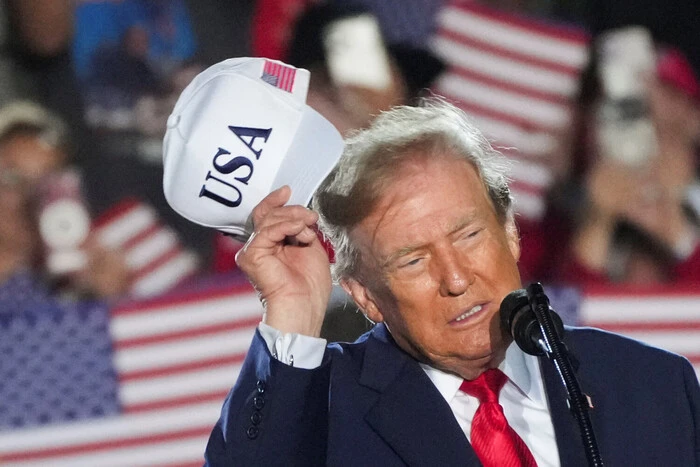
Can the non-chivalrous political order of the «Trumplers» exist after the Trump era? And will the White House leader’s drift towards Russian dictator Putin continue after the crushing election? These two questions naturally arise after the November elections in the United States.
The American MAGA movement has long ceased to be simply a political tool of Donald Trump. What once arose as a personalist protest against the traditional establishment of the Republican Party has gradually turned into a separate political subculture, an ideological coordinate system and a mechanism for mobilizing a significant part of American society.
Comparing MAGA with a political order, and its supporters with the «Templars», we can talk about a community united not only by programmatic provisions, but also by symbols, collective identity, a sense of historical mission and personal loyalty to a political leader.
However, this is where a fundamental question arises: can such a system survive after the disappearance of its main symbol, or is it doomed to disintegrate into competing factions as soon as Trump ceases to be the center of gravity of the American right?
The answer requires distinguishing between two phenomena: Trumpism as a personal political phenomenon and MAGA as a broader socio-political movement. Trumpism is largely built on Donald Trump’s personal style, his communication style, conflict, ability to transform political disputes into issues of personal loyalty and to oppose himself to traditional institutions.
MAGA, on the other hand, has much deeper social roots. It is fueled by distrust of the federal bureaucracy, dissatisfaction with the consequences of globalization, cultural conflicts, the migration issue, a sense of economic and status marginalization of part of the American middle class, and the belief that traditional political elites have lost touch with society. These sentiments did not arise with Trump and will not disappear on their own after the end of his political career.
Given these factors, MAGA should be viewed not as a temporary personal campaign, but as a manifestation of a deeper transformation of American conservatism. The Republican Party has changed its internal structure over the past decade: a significant part of its activists, voters and political representatives began to evaluate loyalty to the Trump system of views as a more important criterion of political affiliation than traditional conservative dogmas.
As a result, the MAGA movement has gradually turned into a kind of political ecosystem, which has its own media channels, intellectual defenders, public organizations, donor networks, activist infrastructure and mechanisms for putting pressure on Republican politicians. This creates the prerequisites for its existence regardless of who will be in the White House.
However, a political order cannot exist indefinitely only thanks to the memory of its founder. It needs continuity, and continuity implies the emergence of new leaders who are able not to simply copy the founder, but to offer their own version of his political legacy.
And here begins the most difficult problem for MAGA. Donald Trump has created a political coalition in which personal charisma, demonstrative disobedience to the rules and the ability to constantly be in the center of public attention have become inseparable elements of political mobilization.
However, charisma is not inherited, like a party apparatus or a constituency. You can inherit slogans, media infrastructure, political technologies and even part of the electoral base, but it is impossible to inherit the personal connection between a leader and his supporters.
In this situation, the figures of Vice President J.D. Vance, Secretary of State Marco Rubio and other representatives of the new Republican generation acquire special importance.
Vance represents an attempt to give Trumpism a more systemic, intellectually structured look, combining populist rhetoric with criticism of globalism, skepticism about the international obligations of the United States, and the concept of national sovereignty.
Rubio represents a somewhat different tradition – a more institutional one, focused on American global leadership and strategic deterrence of totalitarian states. Both politicians may claim to be the heirs of part of the Republican coalition, but their political worldviews are not identical. And this difference may become a source of future internal competition.
The crushing defeat of the Republicans in the midterm elections on November 3, 2026, made this problem much more acute. Democrats gained control of both houses of Congress, and the voting results became a large-scale electoral signal of dissatisfaction with the policies of the Trump administration.
At the same time, it would be an exaggeration to interpret this result as the inevitable collapse of the «Trumpliers» from MAGA or an unequivocal rejection of all his ideas by American society. Midterm elections are an assessment of a particular administration, its policies, and the political circumstances of the relevant moment, and not a referendum on each element of the movement’s ideology.
If we talk about the political prospects of MAGA after Trump, then at least three interrelated processes are possible here.
The first is the institutionalization of the movement within the Republican Party. Its supporters can retain influence on the primaries, the formation of party programs, personnel policy, and the selection of candidates at the local and federal levels.
The second is the personalization of the struggle for Trump’s legacy, when several political figures will simultaneously claim the right to represent the real MAGA.
The third is the gradual fragmentation of the movement into groups that may share a common vision of cultural and domestic political issues, but will diverge on the economy, foreign policy, defense spending, and relations with US allies.
The third process may prove decisive. After all, MAGA has never been a completely homogeneous ideological construct. Within its borders, economic nationalists, religious conservatives, supporters of a tough migration policy, isolationists, opponents of American military intervention abroad, and traditional Republican supporters of strong defense coexist.
As long as these groups are united by Donald Trump, internal contradictions can be postponed or masked by personal loyalty. When the question of a new leader arises, it will be necessary to determine which component of the movement is its true ideological core. Therefore, the post-Trump era may bring not so much the disappearance of MAGA as the struggle for its political definition.
No less important is the nature of Trump’s relations with Russian dictator Putin and the possibility of further rapprochement between Washington and Moscow. In the case of Trump and Putin, a specific model of interaction is observed, in which personal diplomacy, the desire for agreement between leaders, and the perception of great powers as the main actors of the international system play a prominent role.
Trump has repeatedly demonstrated a willingness to negotiate with Putin without first reaching an agreed position with European allies. This approach differs from the traditional transatlantic model, where the American position on Russia was formed in closer coordination with NATO and the European Union.
The peculiarity of this diplomacy is that Trump is inclined to consider the end of the war as a potential basis for a broader restoration of US-Russian relations. For him, the normalization of relations with Moscow can be presented as an independent foreign policy outcome, and not only as a consequence of Russia fulfilling specific security conditions.
It is at this point that a fundamental contradiction arises between the logic of Washington and the logic of European security: if a diplomatic agreement involves concessions to the aggressor without reliable guarantees for Ukraine, it may create not the prerequisites for stability, but incentives for further revision of borders by force.
At the same time, it would be wrong to believe that Putin has received a prospective partner in Trump. There is a fundamental asymmetry of political interests between them. The Kremlin is not ready to consider freezing the conflict on the front line without international recognition of the Ukrainian territories occupied by the Russian Federation as a new geopolitical reality, easing sanctions, limiting Ukraine’s sovereign choice, and effectively revising the European security architecture.
Washington, regardless of President Trump’s personal sympathies, must take into account its own strategic interests, the position of Congress, the defense sector, the intelligence community, the military command, and allies. And these interests do not always coincide with Russia’s.
Therefore, talking about complete strategic unity between Trump and Putin would be an exaggeration. Although it is possible to note the presence of political decisions of the administration that objectively correspond to the individual interests of the Kremlin. This especially concerns the weakening of economic pressure on Russia, diplomatic pressure on Kyiv in order to achieve dubious quick agreements, and the willingness to discuss the future of European security in the format of negotiations between major powers.
Of particular importance is the fact that after the November elections, Trump found himself facing a double challenge. Domestically, his administration faced increased parliamentary control, and in foreign policy, the need to demonstrate the effectiveness of American diplomacy remains.
Under such circumstances, relations with Putin may become one of the areas in which President Trump will try to shape his own political legacy. However, this does not necessarily mean continuous rapprochement. Opposing steps towards Moscow or a change in negotiation tactics are also possible if the Kremlin does not provide Trump with the desired result.
It is also important to understand that the victory of the Democrats in Congress does not give them full control over foreign policy. The president retains significant constitutional powers in the field of diplomacy and military decisions.
At the same time, the new configuration of Congress creates additional opportunities for blocking individual initiatives, controlling funding, investigations, and political pressure. After all, there is a contradiction: Trump’s domestic political positions have weakened, but his powers in foreign policy remain significant.
For Ukraine, this circumstance is of fundamental importance. Kyiv should not build its strategy solely on the assumption that the Democratic majority in Congress will automatically change the policy of the White House. Similarly, the position of the American president should not be identified with the position of the entire United States.
The American political system is much more complex than the personalist model that Donald Trump himself constantly demonstrates. It remains institutions, political forces, economic interests and security commitments that can influence the foreign policy course even in conditions of deep polarization of American politics.
And for Ukrainian diplomacy it is especially important that the issue of supporting Ukraine does not turn into an exclusively partisan issue of American politics. It must remain a matter of American national interests, deterrence of aggression, stability of the European continent and an international order based on the sovereignty of states.
There is another aspect that deserves special attention: Russia’s strategy towards American society is not limited to relations with a specific president. The Kremlin is much more advantageous in a situation in which the United States loses domestic political consensus on its own role in the world, and its allies begin to doubt the long-term reliability of American security guarantees.
In such a system of coordinates, even temporary fluctuations in American policy can have strategic consequences. If European states begin to doubt Washington, if Ukraine is forced to take into account the risk of reduced American support, and Moscow is given the opportunity to conduct separate negotiations with various Western capitals, Russia achieves part of its geopolitical goals even without a formal alliance with the United States.
Therefore, the problem lies not only in the personal relations between Trump and Putin. It is much broader: will the United States remain the guarantor of European security, or will it gradually move to a model of selective participation in international affairs, where relations with major powers will be built mainly on ad hoc agreements.
For Russia, the second option opens up additional opportunities. For Europe, it means the need to accelerate the formation of its own defense capabilities. And for Ukraine, it means the need to diversify external support and maximize the consolidation of security arrangements at the institutional level.
Returning to the metaphor of MAGA-«Trumpliers», it is worth noting that political orders, like religious or ideological communities, can outlive their founders, but do not necessarily retain their original form.
The history of American politics knows examples of movements that changed their leaders, transformed programmatic positions, and gradually became part of a broader party tradition.
MAGA may follow exactly this path. Its social base, political language, and criticism of the traditional establishment are unlikely to disappear with the end of Trump’s presidential career. But it is quite possible that the movement itself will gradually lose its personal integrity and turn into several competing currents of American national conservatism.
The November 2026 midterm elections thus signal not so much the end of MAGA as the beginning of a new phase in its internal transformation.
When Trump remains president until the end of his constitutionally determined term, but his political monopoly within the Republican Party can no longer be perceived as unconditional. Ahead lies a struggle for legacy, for the right to determine the ideological content of the movement, and for control over the party machine on the eve of the 2028 presidential election.
On the Russian front, the Republicans’ November defeat does not in itself guarantee a change in Trump’s foreign policy. Trump’s penchant for personal diplomacy with Putin, his desire to reach a grand bargain, and his willingness to reconsider established approaches to sanctions and international commitments remain important features of his policy.
But the extent of their further influence will depend on the Kremlin’s behavior, domestic political constraints, the position of Congress, and the ability of European allies to develop a coherent strategy.
And after the midterm elections in Congress, which have weakened the White House’s position, Moscow will try to use this situation to achieve new economic concessions and ease sanctions.
In a broader historical perspective, the main question is not even whether the «Trumpliers» will outlive their founder and whether Trump will continue to seek an understanding with Putin.
The main thing is whether American democracy will be able to maintain institutional stability in the face of the personalization of politics, whether the United States will maintain strategic consistency in relations with allies, and whether the international order will remain protected from attempts to revise it by force.








Коментарі — 0