


Ukraine’s victory will only be possible when support for Ukraine matches its resilience


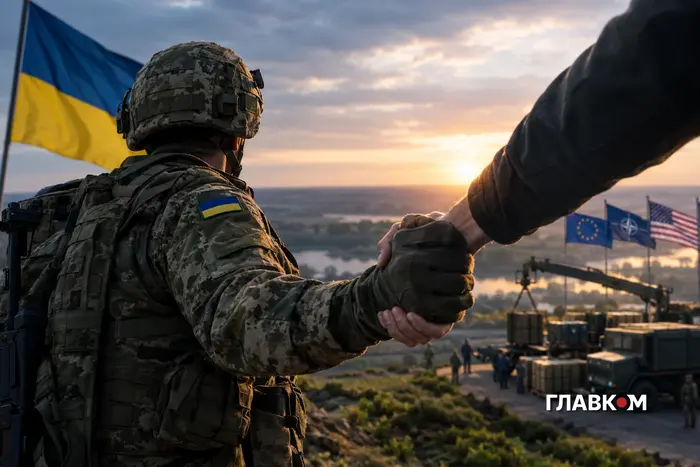
Ukraine’s victory will be possible only when support for Ukraine matches its resilience
Ukraine’s victory will be possible only when support for Ukraine is matched by its resilience. The boundless courage of the Ukrainian people and the resilience of Ukrainian soldiers on the front lines require the same systematic, decisive, and uninterrupted provision of resources, weapons, and technologies from international partners.
Only parity between the internal invincibility of society and external military-economic assistance will allow us to seize the initiative, protect people’s lives, and ensure a just and lasting peace. Resilience creates a springboard for the struggle, but it is large-scale and timely support that turns this resistance into a final victory.
Since victory in the war for Ukraine’s independence, sovereignty, and territorial integrity depends not only on the courage of the Ukrainian people and the professionalism of the Armed Forces of Ukraine, but also on the ability of the international community to provide support commensurate with the scale of the challenges facing the state.
The resilience of society is a fundamental prerequisite for sustained resistance, but by itself it does not guarantee the achievement of strategic goals. To transform the defense potential into concrete military-political results, a combination of internal resource mobilization, technological adaptability, economic endurance and systematic external assistance is necessary.
This is the main law of modern warfare: national determination creates an opportunity for resistance, and the scale, timeliness and predictability of international support largely determine the state’s ability to maintain a strategic initiative.
With its steadfastness and sacrificial courage, Ukraine has demonstrated that social consolidation, national unity, trust in its own institutions and readiness to defend its statehood can become critical factors in countering a much more powerful Moscow aggressor.
Although in a war of attrition, moral resilience cannot compensate for all material, technological and demographic limitations. Modern combat operations require constant replenishment of ammunition, air defense systems, armored vehicles, unmanned systems, electronic warfare, high-precision weapons and equipment for protected communications.
No less important are repair capabilities, logistics, medical evacuation, personnel training and maintenance of weapons. After all, the issue of international assistance is not limited to the volume of transferred military equipment. Because it is about the formation of a holistic support system capable of maintaining the combat capability of the Ukrainian army for a long period and adapting to the changing nature of hostilities.
Also of fundamental importance is the ratio between the resources of the defending state and the material and technical capabilities of the enemy. A war of attrition turns into a competition not only between armies, but also between economic systems, defense-industrial complexes, technological sectors, logistics networks and political will.
And in such circumstances, support for Ukraine should be assessed not only by the volume of financial allocations or the number of transferred weapons systems, but also by their practical impact on the situation.
The key indicators here are the speed of delivery, regular replenishment of stocks, compatibility of equipment, availability of ammunition, the possibility of repair, as well as the correspondence of assistance to the current needs of the front. When a decision is made late, it can lose some of its strategic value, since the military situation changes faster than political and bureaucratic procedures in many democratic states.
A specific challenge for international support remains the gap between political declarations and the practical implementation of commitments. While public affirmation of solidarity has significant diplomatic value, it cannot replace the physical availability of the necessary resources at the right time and place.
In addition, it is now critically important for Ukraine that assistance does not depend solely on short-term political cycles, changes of government, intra-party infighting, or ad hoc budgetary compromises in Western partner countries.
The predictability of military and financial support makes it possible to plan defense operations, build up the system of training military personnel, form reserves, develop domestic production, and use available resources more efficiently. In contrast, periodic delays or uncertainty about future supplies complicate planning and force us to compensate for shortages in conditions where time has a direct price for people’s lives.
At the same time, international assistance should not be viewed exclusively as a manifestation of political solidarity or charity. Support for Ukraine is directly related to the broader interests of European and international security. Because the ability of a state to protect its sovereignty from external aggression affects the authority of international law, the credibility of security commitments, and the perception of the principle of the inviolability of borders.
If the use of force ensures the aggressor’s political gains, this will create risks for the international order and may stimulate other states to revise their own strategic calculations. Accordingly, assistance to Ukraine is also a tool to prevent the spread of the practice of forcible revision of internationally recognized borders.
However, the interests of the partners are not entirely identical, and their potential capabilities and risk assessments differ. In view of this, Ukraine’s diplomatic task remains not only to maintain the coalition of partners, but also to form a stable understanding that the long-term security of Europe and other interested states is linked to the outcome of the war and the conditions for its completion.
The development of the Ukrainian defense-industrial complex is of exceptional importance. External assistance can cover critical needs in weapons and technologies, but long-term strategic stability requires the maximum possible increase in domestic production capabilities. Ukraine must develop its own production of unmanned systems, means of countering them, ammunition, components, communication systems and other technologies in demand on the battlefield.
Joint ventures with partners, technology transfer, localization of production, long-term contracts and integration of Ukrainian companies into European defense supply chains are also of particular importance.
This approach is aimed at reducing dependence on external supplies, as well as at creating jobs, preserving engineering potential, developing innovations and strengthening the economic basis of state sustainability. At the same time, the increase in production should be accompanied by proper quality control, transparent procurement, effective management and coordination between military customers, the state and the private sector.
An equally important dimension is financial and macroeconomic stability. War creates a significant burden on the budget, infrastructure, labor market and social security system. The state is forced to simultaneously finance defense, maintain basic public services, restore damaged facilities and ensure the functioning of critical infrastructure.
Currently, international assistance must include not only the military component, but also projected budget financing, support for the energy system, restoration of transport routes, protection of the civilian population and promotion of economic recovery.
And here it is very important that civilian and military support complement each other, since economic exhaustion directly affects the state’s ability to sustain defense efforts for a long time. A strong economic foundation does not replace military capabilities, but creates conditions for their stable financing and development.
It is worth paying attention to the fact that the technological dimension of war plays a special role. The experience of modern combat operations shows that advantage is increasingly determined not only by the quantity of weapons, but also by the speed of implementation of new solutions, the quality of intelligence, data integration, the stability of communications and the ability to quickly change tactics.
Unmanned systems, satellite data, situational awareness systems, automated control, electronic warfare, and technologies to counter missile and air threats form the interconnected environment of modern combat.
However, new equipment alone does not provide technological leadership on the battlefield. A real advantage is formed thanks to trained personnel, secure software, and a stable communications infrastructure. It is necessary to have a ready repair base and continuously adapt one’s own solutions to constant changes in enemy tactics.
It is also of fundamental importance to understand that military victory and lasting peace are not identical concepts. The cessation of active hostilities in itself does not eliminate the causes of the conflict and does not guarantee the absence of repeated aggression. A just and sustainable peace requires such security conditions under which Ukraine will be able to defend its sovereignty, restore its economy, and develop without the constant threat of a new large-scale attack.
The essence of the problem comes down to strategically combining Ukrainian resilience with international assistance. Ukrainian society has already proven its ability to resist, adapt to extremely difficult circumstances, and maintain statehood in the critical conditions of the Great War.
Ukraine’s resilience creates the basis for continuing the fight against terrorist Muscovy, but large-scale, coordinated, and predictable support expands the state’s ability to achieve its strategic goals. In view of this, the proportionality of internal determination and external assistance should be considered one of the central principles of the security of a united Europe in the 21st century.
And not only Ukraine’s defense prospects, but also trust in international guarantees, the stability of the European security order, and the opportunity to build a peace based not on a temporary pause in war, but on real mechanisms for protecting sovereignty and preventing new aggression, will depend on how consistently this principle is implemented in practice.
Therefore, Ukraine’s strategic success remains directly dependent on the ability of the international community to achieve a balance between the volume of external support and the unprecedented internal stability of Ukrainian society and the Ukrainian state. After all, it is this balance that is the only reliable foundation for restoring Ukraine’s territorial integrity and guaranteeing stable peace throughout Europe.








Коментарі — 0