


The «Trumpeted» Peace Process: Ukraine in the Grip of a New American Strategy



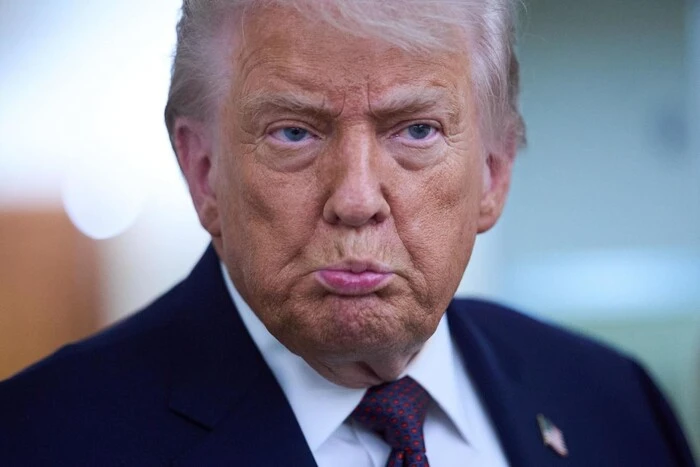
Freezing the war or detonating the conflict? Risks from Donald Trump’s accelerated «peace settlement»
On the eve of the fourth anniversary of the start of the full-scale invasion of the Russian Federation in Ukraine, Moscow’s diplomatic imitation of a settlement is beginning to sound even more acute. What Putin calls a «settlement» is an attempt to legitimize the occupation through diplomatic protocols. Behind the facade of negotiation initiatives in Geneva and Abu Dhabi, the Kremlin’s intentions are hidden to buy time for regrouping and to achieve concessions that go far beyond the purely territorial issue.
An analysis of a «trampled» (blocked or stagnant) peace process requires detailed consideration. After all, when the diplomatic process reaches a dead end, the situation does not become static – it transforms into dynamic degradation. And the new strategy of the United States towards Ukraine creates additional challenges for the dialogue on peace, forcing Kyiv to act within the framework of the course changed by Washington.
The renewed US approach is reformatting the geopolitical framework, which affects the prospects for a peaceful settlement and encourages Ukraine to adapt to the new rules of the game. None of this would have happened if Republicans had acted as they did during the time of President Ronald Reagan. Once upon a time, the Republican Party advocated preventing the spread of totalitarianism in the world and helped emerging democracies that were trying to fight off communism and other forms of tyranny.
Now everything is different. While the administration of President Donald Trump is implementing a foreign policy strategy based on the principles of exceptionalism and the pursuit of global dominance, the leaders of the Russian Federation and the People’s Republic of China are using the personalistic features of the American leader to advance their own geopolitical interests.
When Trump plays the role of the best president of the United States of all time and dreams of becoming a full-fledged «ruler of the world», dictators Putin and Xi Jinping «diluted» him, applying tactics of manipulative influence on the ambitions of the American president, which can lead to the devaluation of the strategic positions of the United States in the international arena and the expansion of the influence of these totalitarian regimes.
It is worth noting that the Kremlin administration views domestic political polarization in America as a tool for achieving its own geopolitical goals. Using the «specific features» of Donald Trump’s political course, the Russian Federation seeks to erode political and social unity in the United States.
This is aimed at minimizing Washington’s influence on the global arena, which creates favorable conditions for the implementation of the Kremlin’s neo-imperial ambitions, attempts by Russia to restore the status of a great power and the restoration of Moscow’s hegemony in the post-Soviet space.
At the same time, in the current geopolitical context, the Kremlin is forced to adhere to a strategy of restraint towards Donald Trump. After all, the Trump administration may switch to a policy of «peace through force», including the lifting of restrictions on the use of Western weapons by Ukraine, if Moscow continues to sabotage the negotiations. Restraint is a tool for avoiding this «hot» phase of pressure.
However, the Kremlin’s prudence is not a change of goals, but a change of tactics. Moscow is waiting for the Trump administration to weaken transatlantic unity as much as possible, trying not to provoke an impulsive and harsh response from the White House.
Thus, within the framework of the modern foreign policy strategy of the Russian Federation, the negotiation process has de facto transformed into a nonlinear continuation of military actions. Moscow views diplomatic communication not as a means of achieving a compromise consensus, but as an auxiliary tool of strategic pressure. Its goal is to legitimize and consolidate those political or territorial preferences, the implementation of which at the current stage is blocked by the low efficiency or exhaustion of conventional military resources.
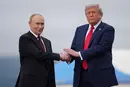
Putin constantly plays a fool in negotiations with Trump, and he perceives primitive flattery as well-deserved compliments from his «best friend». If Ukraine had decided to follow this path, it would have been quite appropriate to rename Donbass to Trumpland, and the city of Donetsk to Trump. And one can hope that Ukrainians would have received all the necessary military assistance to preserve the honor of the population of Trumpland.
And within the discourse on the transformation of leadership paradigms in the 21st century, the consideration of the issue of recognizing the merits of US President Donald Trump is gaining particular relevance. So why not initiate the creation of an exclusive international award for Ukraine – the «World Peace Prize for monumental greatness, strategic perfection, intellectual depth and state wisdom». Before making sure that it is large and gilded.
It is very important that special attention to the technical parameters of the award – in particular, its mandatory gilding – serves not only as a symbolic indicator of its high status, but also acts as a guarantor of the correspondence of the external form to the subjective perception of prestige by its laureate himself – the unsurpassed Donald Trump. Gilding in this sense is an indispensable attribute of the «politics of prestige», which provides psychological confirmation of the international recognition of the awardee.
Whatever it may be, Donald Trump turns a blind eye to the fact that Putin is clearly stalling for time. But when the Iranian and Cuban regimes fall, Putin will have to recalibrate his geopolitics. After all, the Kremlin’s modern foreign policy doctrine is based on a strategy of attrition, where the time factor is seen as a key asset for destabilizing the Western coalition.
The Russian terrorist government assumes that a prolonged confrontation will reveal the institutional fatigue of democratic systems sooner than the resources of the totalitarian vertical will be exhausted. However, this strategy critically depends on the stability of the participants in the «axis of evil», where Iran and Cuba play the role of strategic nodes.
Currently, the situation around Havana demonstrates the vulnerability of the «totalitarian international» to severe economic pressure. The policy of secondary tariffs introduced by the Donald Trump administration at the end of January 2026 has effectively cut off Cuba from oil supplies, provoking the risk of complete humanitarian collapse.
The situation is now such that the Kremlin’s traditional alliances are cracking, and Moscow’s system of long-standing partnerships is on the verge of collapse, leaving previous agreements in a precarious state. After the removal of Nicolas Maduro in Venezuela, Cuba has lost its main source of energy resources.
And for the Kremlin, Cuba is of great geopolitical importance, and is a symbolic and strategic outpost in the Western Hemisphere. The inability to support Havana under the blockade will demonstrate Moscow’s logistical powerlessness towards Cuba, disavow the myth of the global nature of Russia’s military presence, confirm its regional limitations, and undermine Moscow’s status as an «alternative center of power».
It can be assumed that the erosion of stability in Tehran and Havana will call into question the viability of Putin’s model of a «multipolar world», which rests on alliances with rogue regimes. Cuba is a symbol of the fact that «American hegemony» is supposedly not omnipotent even in its own hemisphere. The fall of the regime in Havana will mean the final defeat of Moscow’s model of influence in Latin America.
The collapse of dictatorships in Iran and Cuba automatically turns Russian «multipolarity» into deaf isolation. Without these fulcrums, Putin’s geopolitical model becomes unviable. Russia will be left without key allies in strategically important regions, which will de facto mean the collapse of its claims to the role of one of the poles of the world order.
In the event of the fall of these anti-democratic regimes, Russia risks finding itself in a state of strategic isolation, where the only significant partner will be the PRC, which will strengthen Moscow’s asymmetric dependence on Beijing.
Then Putin will have to switch from a strategy of a global offensive against the liberal order to the tactics of a «fortress under siege», where the main priority will not be the expansion of influence, but the elementary preservation of internal stability in the absence of external support points.
However, Russia’s biggest problem is its own population. The main determinant of the modern vector of development of the Russian Federation is the specificity of its political culture, which is radically different from Western European standards and value orientations of the developed world. This gap became most obvious in the post-bipolar period, highlighting the deep difference between the societies of Central and Eastern Europe and Russia.
While the countries of Eastern Europe interpreted the collapse of the socialist bloc as a «return to normality» and a chance for liberal-democratic modernization, in the Russian collective consciousness the events of 1991 acquired the status of a geopolitical catastrophe. And if Eastern Europeans perceived democracy as an instrument of subjectivity and liberation from the pressure of the USSR, then Russia, through the prism of the loss of its imperial greatness, viewed the 1990s as a period of defeat and chaos.
Which provoked the emergence of a demand for the restoration of totalitarian methods of governance in modern Russian society. When public consciousness demonstrated a willingness to delegate broad powers to the repressive apparatus in exchange for the illusion of security and predictability.
We can say that in Muscovy the phenomenon of «neopatriarchal totalitarianism» in this context acts as a specific form of political adaptation, where the stability of the system is ensured by recreating archaic forms of control and centralization of power.
But unlike neighboring peoples who identified the inefficiency of the Soviet planned system as the root cause of decline, the Russian population tends to seek justification in external factors. And economic difficulties are interpreted not as a consequence of structural flaws in their own model, but as a result of external intervention or “injustice” of the world order. This blocks the possibility of internal reformation and consolidates the state of passive dependence on the state.
We should not forget that the Russian state identity has historically been built around the concept of a mobilization society. In the context of the degradation of civil institutions, the main forms of social activity are processes associated with violence and self-destructive behavior (alcoholism, high tolerance for death).
The Russian state today has turned war into the basis of its existence and the main meaning of being, where social institutions and collective psychology are subordinated to cycles of violence. In addition, there is a high tolerance for human losses in the Russian socio-cultural space. The state uses the mechanism of necropolitics, where the population’s ability to mass self-sacrifice (death for the interests of the regime) becomes the main mobilization resource.
At the same time, this is correlated with a high level of social apathy and destructive behavior patterns, in particular, the abuse of alcohol and other psychoactive substances, which is a consequence of prolonged traumatization and the lack of tools for social vertical mobility.
In view of this, the end of the current military conflict in Ukraine can only be seen as a tactical pause. Without a fundamental transformation of political culture and a rejection of the imperial paradigm, Putin’s totalitarian state will inevitably continue its expansionist policy as the only way available to it for further functioning.
The peace process can only be unblocked due to the critical accumulation of risks for Moscow, which will make the continuation of stagnation a threat to the very existence of the Putin regime. If for the Kremlin, geopolitical and economic losses outweigh the dividends that Moscow is trying to obtain from Russia’s protracted and bloody war in Ukraine.
Because of this, for dictator Putin, the process of de-escalation and transition to a more constructive phase of negotiations can become acceptable only when the price of maintaining existing positions begins to exceed the potential risks of a compromise that requires external stimulation through the tools of preventive diplomacy and forceful methods.
Putin’s readiness to de-escalate and move to a realistic phase of the negotiation process is directly dependent on the balance of marginal costs and expected benefits. For now, the strategic approach of the criminal Putin regime is focused on the concept of «victory through attrition», where the bet is on exhausting the enemy’s resources. And maintaining the status quo or further expansion are considered less risky scenarios than a political compromise.
To transform this calculation, it is necessary to create conditions under which the existential and resource cost of holding the occupied Ukrainian territories and continuing the aggression will begin to dominate the domestic political risks that will inevitably arise if Putin retreats from his maximalist goals.
But such a situation cannot arise spontaneously; it requires systemic external force pressure from the United States, a united Europe, and the entire collective West.
Circumstances have arisen when the aggressor is trapped in a «sunk cost trap». Where each new escalation will occur in order to justify previous miscalculations. Therefore, for Putin, any retreat, in the absence of an obvious military or economic catastrophe, is interpreted as a manifestation of weakness that threatens the internal stability of the regime.
From which we can conclude: de-escalation by the Russian Federation is not a matter of «good will» or successful diplomacy in the classical sense, but a derivative of the successful application of a strategy of forceful deterrence, which makes aggression not only economically impossible, but also militarily futile.








Коментарі — 0