


Diplomacy on Blood: Kremlin Uses Negotiations to Escalate the War



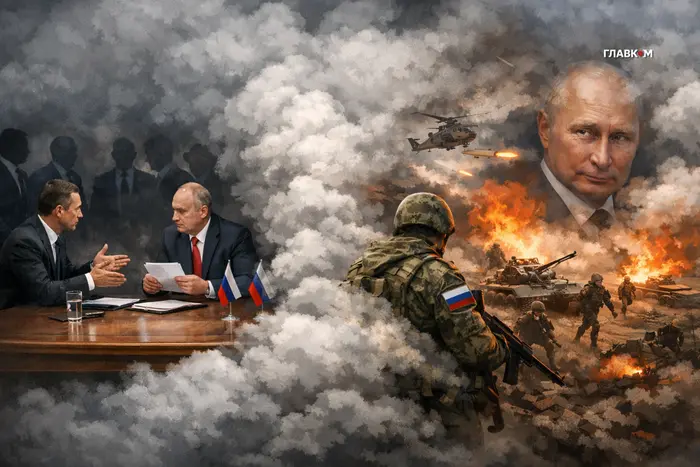
Time loop in diplomatic relations. Russia and the USA are playing the same game again
Today, the art of negotiation is seen as the antithesis of a military confrontation, and diplomatic efforts are traditionally aimed at peaceful settlement by non-violent methods in order to achieve geopolitical goals. Diplomacy acts as a civilizational alternative to military actions, transforming the «zero-sum game» – war, into a process of finding a strategic compromise within the framework of international law.
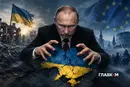
However, in the Kremlin’s arsenal, «diplomacy» has become a direct continuation of war – a specific tool of hybrid aggression, where negotiations serve not to achieve peace, but to legitimize the annexation of Ukrainian territories, disorient the enemy and prepare for new strikes. An analysis of the unfolding events of late 2025 – early 2026 shows: Moscow’s «peaceful» rhetoric is an integral part of the escalation strategy.
All this has become possible thanks to the position of the President of the United States Donald Trump, who for more than a year has continued to claim that it is possible to «negotiate» with Putin, because, they say, he wants «peace». This has naturally led to a situation of «negotiating about negotiating», and it seems that eternal negotiations are needed by the Russian dictator as a smokescreen for regrouping his forces.
Russia continues to demonstrate its unwillingness to conduct good-faith negotiations, instead using diplomatic platforms to stall for time. And the current American administration is playing along with Moscow in this.
The Kremlin’s «diplomacy» has replaced compromise with the language of ultimatums. Any initiative that does not involve the complete surrender of Ukraine is automatically declared «unacceptable» by Moscow. Then «diplomacy on repeat» is launched once again, the main goal of which is to legitimize the occupation of the occupied Ukrainian lands.
And then the «groundhog day» of negotiations between Russia and the United States comes again. Where the key demand of the Russian Federation remains the full transfer of Donetsk, Luhansk, Kherson and Zaporizhia regions within their administrative borders, including territories that it has never controlled.
At the same time, using the ambiguity of previous summits (as in Alaska in the summer of 2025), Russia is trying to present Ukraine as an «obstacle to peace», while preparing the ground for an offensive on new peaceful cities.
Moscow accuses Ukraine of being a party that «seeks to continue the war», since it insists on international law and the restoration of borders. This is calculated on the Western electorate and «realpolitik» politicians who are tired of the long conflict, in order to weaken military and political support for Kyiv.
Russia, which is the recognized world champion in meanness and baseness, is trying to create an international justification for future destruction: they say, «we offered peace in Alaska, but due to Ukraine’s refusal we are forced to continue the military operation». This is an attempt to absolve itself of responsibility for the humanitarian consequences of the assaults on urban agglomerations. Thus, it is quite possible to speak of a manipulative combination of coercive diplomacy and information dominance, where negotiations are not a tool for achieving peace, but a continuation of war by other means.
Moscow uses methods of reflexive control of the West, which consists in actively imposing a distorted perception of reality on Western leaders.
It is worth recalling that reflexive control is a concept that comes from Soviet military psychology (in particular, the works of Vladimir Lefebvre), which consists in transmitting specially prepared information to an opponent in order to force him to voluntarily make a predetermined decision that is beneficial to the manipulator.
Currently, this process unfolds through the following mechanisms:
1. Modeling the opponent’s «worldview»
Unlike classic disinformation, the goal of which is simply to deceive, reflexive management is aimed at changing the decision-making algorithm. The Kremlin studies the values, fears, and logical filters of Western leaders in order to «slide» them into an interpretation of events where the only «rational» way out coincides with the interests of the Russian Federation.
2. Key methods of influence:
Creating false dilemmas. The West is forced to choose between «escalation (nuclear war)» and «concessions (diplomacy)». Since democratic leaders rationally avoid catastrophe, they choose the path of concessions, which is Moscow’s goal.
Deterrence through fear. Regular nuclear threats or border exercises create «red lines» in the minds of Western politicians, which they draw for themselves, limiting the necessary assistance to Ukraine.
Information overload. Throwing dozens of contradictory versions of the same event (as in the case of the MH17 plane crash in July 2014 over the Donetsk region, in which 298 people died) is not intended to force belief in one of them. The goal is to create a feeling that «the truth does not exist», paralyzing the West’s ability to take decisive action.
3. Hybrid war
Russia uses the weaknesses of open societies (freedom of speech, political pluralism) to turn them into tools of self-destruction. A Western leader, acting within the limits of his logic (humanism, pragmatism, electoral cycles), makes a decision that is de facto the result of someone else’s intellectual design.
After all, the creation of «information bubbles» leads to the fact that high-ranking politicians lose the ability to objective analysis. This allows Russia to level the technological and economic advantage of the West by manipulating its will.
It cannot be ruled out that Moscow’s diplomatic catastrophy is a prelude to the expansion of the war to other European states. Because the current mock negotiations can only be a preparation for a larger escalation in 2026, which is capable of going beyond the borders of Ukraine. After all, while diplomats are discussing «demilitarization zones», the Russian Federation is preparing scenarios of artificial crises (for example, the «blockade of Kaliningrad») for a direct clash with NATO.
The Kremlin is also counting on the economic exhaustion of Westerners. That long and fruitless negotiations will undermine the unity of the West faster than Russian resources will run out, despite the record losses of manpower at the beginning of this year.
Russian «blood diplomacy» is not a way to end the war, but a strategic maneuver. For the Kremlin, the negotiating table is the same front line as the trenches near Pokrovsk. Any concession is perceived as weakness and a signal for further escalation.
Moscow’s «blood diplomacy» can be classified as a strategy of coercion combined with the concept of a «zero-sum game». Among the key doctrinal elements of the Kremlin, it is worth highlighting:
- Negotiations as a tool of «hybrid warfare». For modern Russian geopolitics, diplomacy is not a mechanism for achieving consensus, but a continuation of war by other means. This is the implementation of the concept of «non-linear warfare», where information, psychological and diplomatic manipulations have the same weight as missile strikes. The negotiating table is used to disorient the enemy and gain time for regrouping and legitimizing territorial seizures by imposing «new realities».
- Security dilemma and realist paradigm. The Kremlin operates within the framework of hard neorealism, where the international system is perceived as anarchic. In this paradigm, any compromise is a sign of resource depletion.
- A signal of weakness. If one side agrees to concessions without concessions from the other, this is interpreted as vulnerability. According to the theory of rational choice, the aggressor reacts to this by increasing the escalation in order to squeeze even greater concessions from the enemy.
- Escalation for the sake of de-escalation. This is an element of the strategy of reflexive management. When the enemy tries to turn the front line into a real hell, using scorched earth tactics and continuous assaults or creating a borderless humanitarian sphere in order to force the Ukrainians to sit down at the negotiating table on their own terms.
- The frantic military pressure on Kramatorsk or strikes on civilian infrastructure are not just tactics, but the creation of «pain points» that should be converted into political concessions.
- The asymmetry of the perception of peace. For the Western political tradition, peace is a permanent state of the absence of conflict. For the current Russian regime, «peace» is only a temporary truce, necessary to prepare for the next stage of force expansion.
For Moscow, diplomacy is not a way out of the war, but its continuation. Where the task is not a ceasefire, but the complete political desubjectification of the victim of Russian aggression.
This approach of the Kremlin can be explained through the transformation of the classical formula of Carl von Clausewitz: if earlier war was considered «a continuation of politics by other means», then in modern Russian strategy diplomacy becomes «a continuation of war by other means».
Thus, diplomacy becomes a «weapon». It is aimed not at ending the conflict, but at achieving the ultimate political goal – the political desubjectification of the object of influence and its forced inclusion in the orbit of its own interests. And any concession in this coordinate system only reduces the «price of aggression» for Russia, stimulating further acts of violence.
Putin manages to use negotiations as a respite, and diplomatic platforms are used as information weapons (UN, OSCE) and serve as a mouthpiece for disinformation, where the goal is not to convince, but to blur the concept of truth, creating a «parallel reality». Moscow is doing everything to force Ukraine to recognize its deprivation of subjectivity and voluntarily agree to desubjectification. Planning for us to surrender through «dialogue».
The Kremlin seeks to force Ukrainians to accept conditions that de facto mean the loss of sovereignty (Russia’s veto right over Ukraine’s foreign policy and changing the constitutional order under pressure from force).
Because Putin’s goal is not just territorial gains, but political, economic, diplomatic, financial, media, religious, energy, historical, ideological, military, security, demographic, ethnic, technological, digital, social and cultural subordination of Ukraine to the Russian Federation. Thus, completely turning it into a vassal state.
Until now, the Russian dictator has systematically used a strategy of pressure, trying to force Ukraine to accept the terms of surrender, disguising it as diplomatic compromises or promises of a ceasefire. But any territorial or political concession will be perceived by the Kremlin not as a step towards peace, but as evidence of the weakness of the Western security system, pushing it to put forward new illegal claims.
All this can happen precisely because no concessions from Russia are able to help lower the threshold of violence. If aggression does not lead to critical losses (sanctions, military, reputational), it becomes a profitable instrument of foreign policy. And every concession today guarantees a larger demand from Moscow tomorrow.
The aggressive actions of the Russian Federation can be classified as the geopolitical revanchism of a terrorist state that seeks to break the existing world order. And Russia acts as an aggressive revisionist, since it does not simply violate laws, but seeks to replace the existing «rules-based order» with a system of «spheres of influence», where the sovereignty of smaller states is limited.
Russia’s use of “legal instrumentalism” (manipulation of UN norms to justify aggression) becomes an attempt to transform the right of the strong into an official doctrine. Which is a substitution of justice with the dictates of force and justification of arbitrariness through the mechanisms of law. If this revanchism is not stopped by the community of democratic states, the international system risks returning to the state of Hobbes’s «war of all against all», where the only argument is force.
Thus: Russia’s war against Ukraine is not just a regional dispute, but a manifestation of a deep crisis of the world order. This is a destructive attempt by a former declining empire to revise international norms and forcefully impose its own rules of the game that would serve its geopolitical ambitions.
Russian aggression is a systemic rebellion against the modern world order. An entity whose influence remains in the past is trying to break the global «security architecture» only because it no longer guarantees it a privileged status.
Figuratively speaking, this is the agony of former greatness. Russia is trying to turn the «game table» of international politics upside down, since playing by common rules has proven to be a losing proposition for it.
In this context, Ukraine’s resistance to the Russian Federation has become a key factor in preserving the architecture of global security. Because the resilience of Ukrainians is a determining condition for preventing the destruction of global law and order.
However, instead of resolving conflicts, diplomatic negotiations are used by Moscow to legitimize the status quo, gain time, or demoralize the enemy.
Therefore, according to this logic, the only way to stop the cycle of violence is not to «find a compromise», but to increase the price of aggression to a level that will become critical for the survival of the Putin regime, since the diplomatic field for Moscow is just another front of hostilities.
That is why a reliable peace is possible not through agreement to the aggressor’s conditions, but through a sharp strengthening of Ukraine’s defense capabilities and strict international isolation of Putin’s revanchist criminal regime, which imitates the language of «peace» only to prepare its new crimes.









Коментарі — 0