


1470 days of the Great War against Russia: how spirit and strategy prevail over the «magic of large numbers»



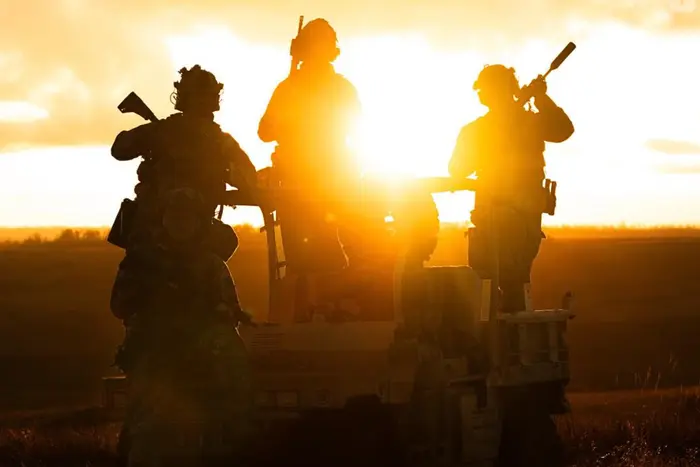
In the world of the future, the winner is the one who learns faster and interacts better, not the one who has accumulated more scrap metal from the last century
Today marks the 1,470th day of Putin’s «three-day special operation». Since the start of the war, intelligence analysts underestimated Ukraine’s capacity to fight while overestimating the strength of the Russian Federation. Russia’s war against Ukraine has now lasted longer than the Soviet Union’s war against Nazi Germany.
Crossing the 1470-day threshold since the beginning of the Russian Federation’s full-scale aggression is not merely a calendar milestone, but a starting point for a critical reimagining of modern conflictology. The duration and intensity of this confrontation have exposed a fundamental crisis in the classical models of strategic analysis that have dominated Western academic and intelligence circles for decades.
Furthermore, an analysis of the duration and nature of the Russian-Ukrainian war through the prism of 1470 days of confrontation reveals a fundamental crisis in classical strategic forecasting models.
The erroneous assessments made by intelligence communities on the eve of the full-scale invasion were based on quantitative metrics – the «magic of large numbers» of the Russian military-industrial complex and manpower. This approach ignored qualitative factors: the networked resilience of Ukrainian society, the institutional flexibility of the Armed Forces of Ukraine, and the asymmetry in the capacity to perceive, assimilate, and process operational information.
Western analysts operated with categories of GDP, tank fleet sizes, and divisional structures, deriving from them a linear correlation with victory.
However, the reality of these 1470 days has demonstrated that in the context of postmodern warfare, the quantitative advantage of the Russian military-industrial complex and mobilization resources is offset by qualitative factors that defy simple digitization.
The first and key aspect of this transformation was the network resilience of Ukrainian society. Classical political science views the state as a hierarchical structure, where the defeat of the center automatically leads to the collapse of the periphery.
In the Ukrainian case, we observe the phenomenon of «horizontal legitimacy», where the capacity for self-organization among communities, volunteer networks, and businesses has created the system’s defensive strength.
When hierarchical links were severed under the pressure of fire, the network structure continued to generate resistance, ensuring logistics and social protection without direct orders from above. This transformed Ukraine into a «non-linear target» that cannot be paralyzed by a single strike against decision-making centers.
The second factor is the institutional flexibility of the Armed Forces of Ukraine, which stands in sharp contrast to the inability of the cumbersome Russian military machine to adapt quickly. The Russian strategy proved to be a hostage to its Soviet legacy – centralized command and a rigid doctrinal commitment to massed artillery offensives.
Instead, the Ukrainian side demonstrated a high degree of adaptability by integrating civilian technologies – ranging from Starlink to commercial drones – into military architecture in real time. This «technological democratization» of warfare achieved tactical parity even amidst ammunition shortages, transforming the battlefield into a space for constant experimentation where innovation carries more weight than outdated armor.
The third and perhaps most significant element is functional asymmetry. Russian strategic planning was based on a flawed anthropological assumption regarding the lack of agency of the Ukrainian people. This cognitive blindness led to a strategic miscalculation: the aggressor prepared for a punitive operation but encountered a total people’s war.
The Ukrainian strategy, conversely, leveraged an understanding of the enemy’s internal weaknesses – namely, its systemic corruption, fear of accountability, and inability to foster grassroots initiative. This allowed the Armed Forces of Ukraine to dictate the pace and nature of combat, employing asymmetric methods where direct confrontation would have been devastating.
Consequently, the experience of 1470 days of war compels the global community to abandon oversimplified models of «realism» that ignore the socio-cultural and institutional capital of nations.
The future of strategic forecasting must be based on a synthesis of quantitative analysis and a profound assessment of social resilience, institutional flexibility, and the capacity for rapid learning. For Ukrainians, the cost of defeat (genocidal practices, the elimination of identity) is perceived as higher than the cost of resistance.
This creates a situation where traditional political realism, which suggests compromise in exchange for territory, fails to apply, as for Ukraine, the war has become a matter of national survival.
A massive undervaluation of Ukraine’s agency by Western analysts led to a delayed transformation of the security architecture, where Ukraine now serves not as a buffer, but as a key outpost defining the future contours of the global liberal order.
The Russo-Ukrainian war has proven: in the 21st century, victory goes not to those with more hardware, but to those capable of faster translating information into action and societal rage into coordinated defensive energy.
A fundamental paradigm shift in modern security and public administration has taken place. The Russo-Ukrainian war has set a global precedent for the transition from industrial warfare (quantity of equipment) to algorithmic and network-centric warfare.
Ukraine has proven that national resilience is a synergy of high technology and a high level of social trust. In the world of the future, the winner is not the one who has accumulated more scrap metal from the last century, but the one who learns faster and cooperates better.











Коментарі — 0