


Fear manipulation: will a staged assassination attempt on Orbán help him win the elections in Hungary?



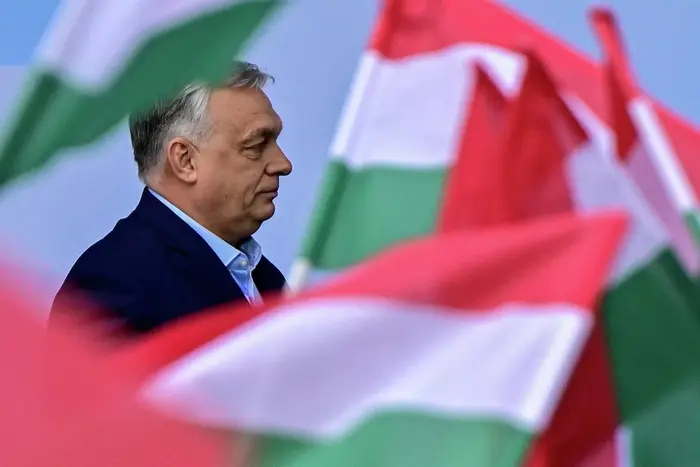
Hungarian rift. How the Russian Federation’s secret services are trying to snatch victory from Peter Magyar
An article by British investigative journalist Catherine Belton, «To tilt Hungarian election, Russians proposed staging assassination attempt», appeared in the influential American publication The Washington Post.
In it, she notes: «Officers of the intelligence service, or SVR, suggested that decisive action might be necessary – a strategy they called «Game Change». In an internal report for the SVR, obtained and certified by a European intelligence service and reviewed by The Washington Post, operatives suggested a way to «fundamentally change the entire paradigm of the election campaign» – to «organize an assassination attempt on Viktor Orbán».
«Such an incident would shift the perception of the campaign from the rational sphere of socio-economic issues to an emotional one, where the key themes would be national security and stability and the protection of the political system», the operatives wrote in a report prepared for the SVR's main political influence operations unit, the MS Directorate, or Department of Active Measures».
Catherine Belton further writes: «There have been no physical attacks on Orbán, whose popularity has plummeted due to the worsening economic situation. But the very idea of organizing an attempt on Orbán's life underscores how high the stakes are for Moscow in the Hungarian race. The attack in July 2024, during which Donald Trump was hit by a bullet from a would-be assassin, led to the emergence of iconic photos of him, praise for his resilience, and a rapid rise in his poll ratings, especially among core supporters».
The emergence of sensational information about the preparation or consideration of an assassination scenario against Viktor Orbán as an instrument of the «Game Change» strategy by the Russian special services (SVR) is indicative of the use of political violence.
And this case demonstrates Moscow's shift from a strategy of «soft power» or information influence to a radical mechanical intervention in the political architecture of the European Union. In considering this report, it is important to understand the logic of the regime of dictator Putin.
For the intelligence services of the Russian Federation, the staging of the assassination attempt on Viktor Orban is primarily aimed at interfering in the electoral process in Hungary and discrediting Ukraine in the international arena.
If the plan had succeeded, the Muscovites would have used it as an excuse to discredit the Ukrainian special services, placing responsibility for this terrorist attack on them. Which would have aimed to provoke an emotional explosion in Hungary and the conservative environment of Europe, finally destroying the unity of NATO and the European Union.
There is no doubt that the «Change the Game» strategy indicates that the Kremlin's traditional methods of influence have been exhausted. When diplomatic pressure and disinformation campaigns do not bring the desired pace of destruction of Euro-Atlantic solidarity, the special services resort to creating a «black swan» – an event that radically changes the agenda.
And this can be classified as an attempt to cause a systemic shock that paralyzes rational decision-making and will transfer the political process in Hungary to a plane of chaos and mutual accusations.
At the same time, the very fact of the leak of this planning report by Moscow, through European intelligence to The Washington Post, is an element of an effective operational counterintelligence game. After all, the publication of the plans de facto nullifies their effectiveness, since any incident with the Hungarian prime minister will now automatically be viewed through the prism of the Russian scenario.
This creates a situation of strategic deterrence through publicity: Russia loses the opportunity to use this tool without the risk of being instantly exposed. Thus, we are witnessing the transformation of intelligence into a powerful political weapon that preemptively blocks the Kremlin's most radical scenarios for the Hungarian elections.
Also, the publication of intelligence data through The Washington Post indicates the final legitimization of the strategy of «preventive publicity» as a tool of hybrid deterrence. And this act is not just a leak of information, but a targeted counterintelligence operation that transforms classic covert diplomacy into open information confrontation.
The main mechanics of this process are to eliminate the element of surprise, which is critically important for the implementation of the Kremlin's terrorist scenarios. When plans to destabilize or simulate the physical elimination of political figures (in this context, the Hungarian prime minister) become public knowledge, they instantly lose their operational value.
Since it is obvious that any further attempt to implement such a scenario is automatically labeled as Russian aggression, which deprives Moscow of the opportunity to act under a «foreign flag» or write everything off as chance.
This strategy creates the effect of an «information panopticon», where the aggressor realizes that his every step is under constant control, and the results of this surveillance can be made public at any moment.
Intelligence is being transformed, it is turning from a passive resource for decision-making into an active political weapon of preventive action. When the planning of a simulated assassination attempt on Hungarian Prime Minister Viktor Orban became public knowledge, this radically changes the architecture of European security. Because instead of reacting to the consequences of incidents, Western intelligence communities block the very possibility of their occurrence through media channels.
Publicity in this context acts as a form of strategic deterrence, forcing the Kremlin to abandon the most risky operations due to the inevitability of instant exposure and subsequent political isolation.
As a result, we are witnessing a transition from traditional intelligence activities to public psychological warfare, where dominance in the information space allows dictating the conditions of real policy and neutralizing threats at the planning stage.
This process can be defined as «preventive disclosure of intelligence», which turns secret information into a public political asset, radically changing the rules of the game in the conditions of hybrid confrontation with totalitarian systems and their vassals.
The case of the disclosure of plans for an assassination attempt on Viktor Orbán is a classic example of the implementation of the doctrine of «strategic transparency», where intelligence becomes a tool of information hybrid warfare, aimed not at fixing the fact, but at paralyzing the aggressor's will to act.
Intelligence data ceases to be just information, turning into an active tool of foreign policy and public diplomacy. Previously, the traditional security model assumed a reactive nature of actions: an incident occurs – intelligence establishes the culprit – politicians introduce sanctions. The modern model turns this logic upside down. The publication of the enemy's plans at the stage of their operational processing deprives him of a key advantage – «plausible denial».
When the Russian dictator Putin or any other totalitarian ruler realizes that his every next step is calculated and will be instantly covered in the world media with a precise link to the executors, the price of the operation increases sharply, and its political expediency is leveled.
A situation arises in which the intelligence communities of the West move from the role of passive observers to the role of active architects of the information space, dictating the agenda.
Such mediatization of intelligence serves as a strategic fuse. It creates a situation in which a covert operation becomes impossible due to the loss of the effect of surprise. This forces the aggressor to resort to more conservative methods or to abandon escalation altogether.
At the same time, this indicates a deep crisis of traditional espionage: in a world of total digitalization and transparency, secrecy ceases to be a reliable currency. Instead, with dominance in the cognitive sphere, the ability to convince the audience and opponents of one's own omniscience becomes a real lever of power.
This is a transition to the format of «public cognitive war», where victory is won not on the battlefield or even in the corridors of the special services, but in the headlines of leading publications that preemptively destroy the enemy's operational plans.
Which radically changes European security, since the security contour now runs not only along the borders of states, but also along the border of information stability and the ability of special services to communicate quickly.
Publicity becomes a form of weapon that neutralizes threats in the bud, making the political isolation of the aggressor inevitable even before the moment of his crime. As a result, we see the formation of a new world order, where informational advance begins to compete with traditional military power and economic dominance.
When network solidarity, based on open data and digital diplomacy, turns out to be faster and more flexible. Publicity destroys the dictatorial monopoly on the interpretation of events, which Moscow is constantly doing, making the price of aggression unacceptably high due to the instant loss of reputational and economic capital.
After all, the ability of the state to control the global narrative today is a key element of sovereignty. This makes aggression impossible without catastrophic consequences for the regime, turning information dominance into a tool of deterrence.
In the era of instant information dissemination, information superiority becomes as reliable a shield as weapons. If the state has the initiative in the media, then any crime of the aggressor automatically entails an inevitable retribution.
And although information dominance does not eliminate the need for weapons, it fundamentally changes their role: from the main tool of attack, it turns into a means of protecting the reality that has already been built in the media space.













Коментарі — 0