


Trump doesn’t understand how people live in Ukraine. Then invite him to Kyiv and Kharkiv



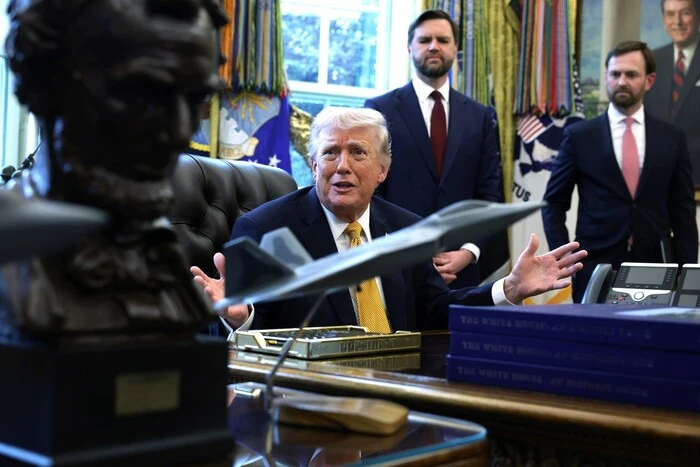
Trump doesn't understand how people live in Ukraine
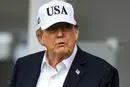
The statement of the President of the United States that «They are probably used to it. I don’t know. I mean, people live in Ukraine too. One would think that they shouldn’t live in Ukraine, but they do. I don’t know if I would, but they live in Ukraine. They live in Lebanon too», suggests that Donald Trump is not ready to understand that the war in Ukraine is being waged not only for territory, but for the right of the Ukrainian people to exist.
This statement once again demonstrates Trump’s specific approach to foreign policy, which is often called «transactional isolationism». Currently, such rhetoric indicates ignoring the causes and circumstances of the emergence of geopolitical conflicts.
And here it is worth noting that when comparing Ukraine with Lebanon, Trump uses the technique of normalizing the crisis: he presents the state of constant threat and military action not as an anomaly that requires immediate international intervention and restoration of law and order, but as an unchanging territorial fact.
His words that people «probably got used to it» indicate a deliberate insensitivity to the humanitarian aspect of the war. And this reflects the strategy of removing the US from the role of «world policeman» and emphasizes the priority of the domestic agenda.
And the statement «I don’t know if I would do it» regarding living in a conflict zone emphasizes his tendency to evaluate global processes through the category of personal comfort and rational choice of the individual, which is atypical for traditional diplomatic ethics. After all, such rhetoric by Donald Trump, consciously or unconsciously, undermines the concept of solidarity, replacing it with fatalism.
It can be assumed that this is a signal of a potential change in the paradigm of support for Ukraine: instead of a value-based approach (democracy versus totalitarianism), the perception of the conflict as a chronic condition is proposed, which logically leads to a reduction in resource costs for its resolution.
Thus, Trump forms the basis for a policy of «freezing» or neutrality, appealing to the fact that life continues even in destabilized regions, and therefore, the severity of the problem is exaggerated.
An analysis of Donald Trump’s rhetorical strategy regarding the war in Ukraine allows us to state a systemic shift from «moral imperative» to «pragmatic realism», which aims to rethink the previous foreign policy paradigm of the United States.
Using elements of fatalism, Trump not only states the complexity of the conflict, but also consciously reconstructs the perception of war as a «natural» or «chronic» phenomenon that is beyond the effective influence of liberal support instruments.
It is obvious that such an approach undermines the concept of transatlantic solidarity, which is based on the values of democracy, turning it into an excessive burden for the modern American isolationist ideology.
A key element of this transformation is the rejection of the previous «democracy versus tyranny» position. Instead, a transactional model is proposed, where the war is viewed through the prism of costs and risks, and not through the prism of international law or ethical obligations.
Therefore, the emphasis on the fact that life in Ukraine continues despite the fighting serves as a tool to lower the threshold of sensitivity of the Western electorate to the horrors of Russia’s bloody war in Ukraine.
Which, in turn, creates the illusion of controllability of chaos and reduces the level of existential threat that Russian aggression poses to the global order. Thus, Trump’s rhetoric forms the conceptual basis for the transition to a policy of «strategic disengagement» or a forced «freezing» of the conflict.
In this context, «fatalism» becomes an alleged reason for reducing resource assistance. If victory cannot be achieved in the foreseeable future (according to his logic), then further investments in Ukraine’s defense are presented as an inefficient use of US national capital.
All this looks not just as a change of emphasis, but an attempt to legitimize a new type of neutrality, where Washington abandons the status of the main defense resource of the democratic world and moves to the role of a mediator, for whom maintaining stability (even at the cost of territorial concessions to the object of aggression) is a higher priority than restoring justice.
Thus, the rhetoric of US President Donald Trump prepares the ground for dismantling the value architecture of support for Ukraine, replacing it with a geopolitical calculation, where the status quo becomes more acceptable than a prolonged confrontation with the aggressor.
The central element of this strategy is the legitimization of the concept of «new neutrality». When Washington de facto abandons the role of a moral arbiter and unconditional guarantor of the security of allies, instead trying on the role of a pragmatic mediator.
For this type of leadership, the priority is not the restoration of international justice or the territorial integrity of a sovereign state, but rather minimizing the risks of escalation and stabilizing macroeconomic indicators.
Within this approach, a prolonged war is perceived not as a path to victory over the aggressor, but as a destabilizing factor that exhausts American resources and distracts attention from the systemic confrontation with China. Therefore, freezing the conflict through the status quo – even with painful territorial concessions from the object of aggression – is assessed as a more rational scenario than indefinite support for the de-occupation strategy.
The transformation of values into geopolitical calculations leads to the erosion of the very architecture of support for Ukraine. If the previous administration appealed to the categories of freedom and international law, the current rhetoric is aimed at dismantling these concepts as «idealistic excesses».
Instead, the logic of «strategic certainty» is proposed, where the ultimate goal is not a just peace, but a ceasefire at any cost. This creates a dangerous precedent in international relations, where the right to force receives tacit recognition through the mechanism of «mediation», and stability becomes an excuse for ignoring acts of aggression.
Thus, we are witnessing a transition to an era where global security is based not on shared values, but on shaky agreements between major players, which effectively returns the world to the logic of spheres of influence and the great chessboard of the 19th century.
All this is true, but the statement by US President Donald Trump that he does not understand how people live in Ukraine opens a certain window of opportunity to invite him to visit Kyiv and Kharkiv.
Trump’s misunderstanding of the living and security conditions in Ukraine under current circumstances is not just a manifestation of subjective skepticism, but a classic «rhetorical window» that Ukrainian diplomacy can use to reformat bilateral relations.
Because such a discourse opens the way to the application of the strategy of «visualization diplomacy», where the direct empirical experience of the state leader becomes a key factor in adjusting his foreign policy paradigm. And Donald Trump’s invitation to Kyiv and Kharkiv in this context performs several critical functions.
First, a visit to Kyiv would allow demonstrating the institutional stability of the state – the functioning of the government quarter, business and civilian infrastructure in conditions of constant threat, which directly appeals to Trump’s pragmatic worldview, which values the efficiency and viability of systems.
Second, the inclusion of Kharkiv in the route is of strategic importance for demonstrating the frontier nature of the Ukrainian resistance. Kharkiv, as a metropolis under constant shelling but still economically and socially active, is an ideal platform for destroying isolationist myths about a «distant war».
For Donald Trump, as a politician whose decision-making style is largely based on personal impressions and visual evidence, such a contrast between the capital and the frontline city could transform the abstract concept of «aid» into a concrete understanding of investments in a security architecture that actually functions.
In addition, such a visit would allow Ukraine to seize the initiative in the information field of the United States, shifting the emphasis from financial costs to human and geopolitical capital. Since the personal presence of a leader in a conflict zone often leads to a “psychological personalization” of the problem, which makes further refusal of support politically more difficult.
Using a reckless or skeptical statement as a pretext for an official invitation is a form of «intellectual jiu-jitsu» in diplomacy. When Ukraine does not simply deny the thesis of «misunderstanding», but offers a tool for overcoming it through direct interaction, which is fully consistent with Donald Trump’s political style, focused on direct contacts and personal participation.








Коментарі — 0