


Russia vs. Ukraine: Stronger states will lose if they don’t win



Russia failed to destroy Ukraine as a political project, and it lost its main bet, while the very existence of an independent Ukrainian state is the greatest geopolitical triumph of our time
The influential American publication The Hill published an article by Alexander J. Motyl, a professor of political science at Rutgers University in Newark, entitled «Putin’s delusions in Ukraine could rouse him to take on NATO».
Among other things, Professor Motyl, considering the situation in Ukraine, comes to the following conclusions: «Imagine the United States invading Canada, a country with one-tenth the population of the United States and an incomparably smaller and less equipped army. Imagine also that American troops quickly capture parts of Ontario, Quebec, and Manitoba. Imagine, finally, that Canada manages to push the United States out of some of the territories it initially captured and achieve a stalemate on the front. And then, after four years of intense fighting, the United States controls only 19 percent of Canada and has suffered 1.3 million casualties.
Most reasonable people would conclude that the United States has already lost such a conflict – not because every stalemate qualifies as a defeat, but because a superpower must be able to defeat a much smaller and weaker adversary. Weaker states win if they don’t lose. Strong states lose if they don’t win.
The same is obviously true for of the Russian-Ukrainian war. The current stalemate is a victory for Ukraine and a defeat for Russia. Although the Trump administration does not seem to understand this, Vladimir Putin seems to live in a fictional world».
Professor Oleksandr Motyl’s thesis that «strong states lose if they do not win» reflects a fundamental asymmetry in international relations theory, where the statics of power often give way to the dynamics of political will.
And this statement is not just a paraphrase of Henry Kissinger’s maxim, given in January 1969 in the article «The Viet Nam Negotiations», where he derived the famous formula of asymmetric warfare in the influential magazine Foreign Affairs: «The guerrilla wins if he does not lose. The conventional army loses if it does not win», but a deep analysis of the structural vulnerability of totalitarian and imperial regimes. For a great power that initiates a conflict or claims hegemony, the lack of a clear and quick victory automatically triggers the mechanisms of internal degradation.
This is due to the crisis of legitimacy, because in rigid vertical systems the right to power is often based on the myth of invincibility and the effectiveness of the «strong hand». But when this force is faced with the inability to achieve its declared goals, the social contract, which is based on the fear and prestige of the regime, collapses, leading to the fragmentation of elites and the growth of protest sentiments.
Professor Motyl’s concept also emphasizes the role of resource depletion and Muscovy’s institutional paralysis. A great power has much higher «maintenance costs» of its position: logistics, financing of occupation, sanctions pressure and the need to maintain global status require colossal investments.
But if the war enters the phase of attrition, the lack of victory becomes the equivalent of strategic defeat, since resources are spent on maintaining the status quo, while the opponent (often a smaller state) wins by the very fact of its survival.
In this context, «non-victory» for the aggressor Russia means the delegitimization of its international status and the destruction of the deterrent effect that encourages other political actors to resist.
Professor Alexander Motyl’s article indicates that for great powers in a state of decline or systemic crisis, any outcome other than the surrender of the enemy becomes a catalyst for internal collapse, turning a foreign policy failure into a fatal domestic political catastrophe.
Currently, the concept of «non-victory» in the context of modern Russian aggression is key to understanding the erosion of imperial resilience, where the absence of a clearly articulated triumph is equated with strategic defeat.
After all, before the Great Russian War in Ukraine on February 24, 2022, the international status of the Russian Federation, which presented itself as a «great power», rested not only on material resources, but also on the ability to imitate unquestioned power.
But when aggressive totalitarian Muscovy encountered protracted resistance in Ukraine, its role as a global and regional arbiter rapidly degraded.
The destruction of the deterrent effect is cascading. Seeing that the Kremlin can no longer impose its will by force, global geopolitical players and regional leaders stopped adapting to Moscow and began to openly seek alternatives, maneuvering between different centers of influence.
This turns yesterday’s hegemon into a «paper tiger», whose threats can no longer be taken seriously by anyone as unalternative directives.
The analysis of Professor Oleksandr Motyl aptly highlights the internal mechanics of this process. Since for totalitarian regimes with messianic claims, external expansion is not just a tool of geopolitics, but the foundation of internal legitimacy.
In a state of systemic crisis, any result that does not end with the complete surrender of the opponent dismantles the myth of the regime’s invincibility. This triggers the mechanism of «internal collapse», where the elites begin to search for those responsible for the lack of victory, and the repressive apparatus loses confidence in the stability of the power vertical.
And this inability to achieve victory transforms external failure into a direct threat to the very survival of the state system. And in the conditions of degradation of state institutions, the inability of the Russian Federation to win turns into a trigger for irreversible changes. At the same time, becoming the main detonator of internal processes that transform the accumulated social and elite discontent into a fatal political catastrophe. Where the discrepancy between the desire to seize territories and dominate others and the real capabilities of Moscow leads to the destruction of the power monolith.
An examination of the current political dynamics of the Russian Federation indicates that it has found itself in the trap of a «strategic gap», when the discrepancy between declared imperial ambitions and available resource capabilities becomes critical.
In the context of the progressive erosion of state institutions in Russia, which have effectively become instruments for serving the narrow corporate interests of the ruling elite, the state of «non-victory» appears not simply as a military failure, but as a powerful catalyst for a systemic crisis. This phenomenon nullifies the existing social contract, which was based on the idea of restoring geopolitical greatness in exchange for loyalty and the renunciation of political rights.
In such a development of events, the final destruction of the unity of power becomes practically inevitable due to the degradation of the mechanisms of arbitration between elite groups. When the central government loses its ability to demonstrate success and guarantee the security of assets, intra-elite conflicts move from a hidden stage to an open phase of the struggle for the redistribution of resources, which are increasingly shrinking.
Social discontent, which has long been suppressed in Russia by the repressive apparatus and media propaganda, can provoke a growing explosion, inevitably becoming an instrument in the confrontation between the Kremlin and regional elites. And this destabilization due to mass discontent will be used by regional clans to weaken the Kremlin dictatorship.
Therefore, a political catastrophe can be the logical conclusion of a long period of institutional degradation, where the Kremlin’s ignoring of its own limitations will end in the paralysis of governance and the collapse of the entire state system.
It can be said that Professor Oleksandr Motyl’s argument is based on the classic distinction between tactical achievements on the battlefield and strategic consequences for statehood, where the current state of «positional war» is interpreted not as a defeat for Kyiv, but as a fundamental failure of Moscow’s revisionist goals.
Indeed, from the point of view of political realism, victory in the war is determined by the ability of the Ukrainian political community to maintain sovereign subjectivity in the face of a threat to its existence.
Since Russia’s initial task was the complete liquidation of Ukrainian statehood, demilitarization and the establishment of a puppet regime, the inability to achieve these goals over a long period of time de facto means the strategic defeat of Putin’s totalitarian regime.
Ukraine, despite temporary territorial losses and resource depletion, has not only maintained institutional stability, but also achieved unprecedented integration into the Western security architecture. Which in the long term makes it part of the transatlantic space, even with a «frozen» front.
In this context, the «dead end» becomes a trap for Russia, since it destroys the myth of the invincibility of its army and forces Moscow to spend enormous resources on maintaining the occupied territories without the ability to finally impose its political will on them.
Also, the static nature of the front line reveals the limitations of Russia’s offensive potential and turns the war into an exhausting competition of economies, where Russia is forced to confront the consolidated resources of the West.
Ukraine, which is under the umbrella of Western support, manages to modernize the defense sector and focus on political survival. What Ukrainians used to create a new type of state – a «militarized democracy» with a high-tech economy capable of autonomous survival in conditions of prolonged conflict.
To form this model of «militarized democracy», Ukraine used a unique synthesis of the existing industrial base, Western management standards and the phenomenon of the «network society».
This can be defined as a «social contract of resilience». When traditional democracy adapted to the conditions of a protracted war through a high level of self-organization – a volunteer movement. An unprecedented system was created where society does not simply consume security from the state, but is its active co-producer.
Ukraine transformed from a recipient of international aid to a key provider of regional security, turning into a unique technological military laboratory of the Western world. A place where the cycle from idea to use of weapons was reduced from years to months or even weeks.
The current armed conflict in Ukraine is a catalyst for a fundamental revision of classical military science. While current Western military statutes are largely based on the experience of low-intensity conflicts or traditional wars of the last century, the Ukrainian experience demonstrates a shift in strategy in favor of the dominance of high technology over quantitative resources.
Thus, Ukraine is practically shaping a new architecture of global security, where technological asymmetry and the digitalization of the battlefield are becoming determining factors of strategic advantage, forcing the world’s leading armies to adapt their doctrinal documents to the realities of high-tech warfare.
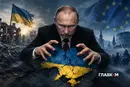
Totalitarian Russia staked everything on the «death» of Ukraine as a state, but received the birth of a powerful regional leader with the most combat-ready army in Europe and a unique experience of resilience. The existence of an independent Ukrainian state itself became the greatest geopolitical triumph of modern times.









Коментарі — 0