


Ukraine’s sovereignty has become a stumbling block: Moscow is not ready for a peace among equals



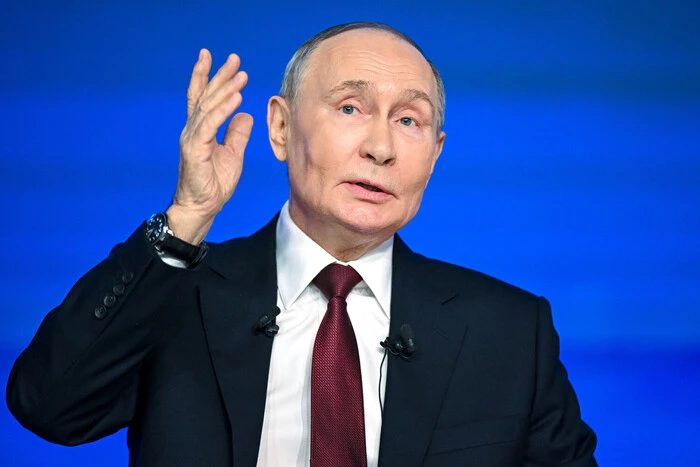
The Kremlin ignores international law in its relations with Kyiv. Therefore, peace on the basis of parity and the recognition by the Russian Federation of the subjectivity of the Ukrainian state are key obstacles to ending the war
The recent statement by the head of the Russian Foreign Ministry, Sergei Lavrov, that «no one in the European Union has said a word about guarantees of Russia’s security, without which the conflict cannot be overcome», reflects Moscow’s real position on its protracted bloody war in Ukraine. In essence, this is a political declaration of the Russian Federation’s unwillingness to recognize Ukraine as an equal subject of international law, which remains one of the key and most difficult barriers to achieving any real and stable peace in Europe and the world.
That is why Russia attacked Ukraine in 2014, because it considered international recognition of its independent status an unfortunate misunderstanding that could be easily, once and for all, «corrected» by force. Now, in the fifth year of the Great War, the Kremlin is looking for other approaches to legitimizing its non-recognition. Why put forward any unacceptable demands and constantly try to impose its distorted vision on the collective West as the only possible option.
After all, according to the «logic» of this same Lavrov, providing «security guarantees to Russia» is nothing more than the cessation of the existence of a Ukrainian state independent of Moscow. And such a Kremlin strategy is based on the concept of «limited sovereignty». It becomes obvious that Russian «security guarantees» are a political euphemism for establishing full geopolitical control over Ukraine and turning Ukraine into a «buffer zone».
Because for Moscow, security does not consist in the absence of the threat of attack, but in the absence of the subjectivity of its neighbors and their inability to make independent decisions. In Putin’s vision, Ukraine should become a territory without the right to its own foreign policy, army or alliances. And ideally, for the criminal Russian regime, a «safe» Ukraine is a Ukraine that does not exist as an independent entity on the political map of the world.
This can be defined not only as a consequence of individual decisions or domestic political ambitions of the Kremlin, but rather as a systemic manifestation of a hybrid foreign policy based on historical mythologies, imperial ideas about spheres of influence and a refusal to recognize modern international legal reality. Which clearly illustrates how psychological, cultural and political deep imperial complexes can shape the foreign policy of the Russian Federation in the 21st century.
Since, from a historical point of view, Russia has traditionally positioned itself not simply as a state among equals, but as the center of a separate civilizational model, which supposedly has the right to control political processes in neighboring countries.
This was manifested in the policy of «fraternity of peoples» back in the Soviet period, which concealed systemic control and total violent Russification behind beautiful slogans. And in the post-Soviet era, it was transformed into the idea of «Russian world», which supposedly justifies interference in the internal affairs of sovereign states that Moscow considers historically or culturally «its own».
In the case of Ukraine, this became critical after 2014, when the occupation of Crimea and the invasion of Moscow’s illegal groups into Donbas showed that Russia was not ready to recognize the territorial integrity of Ukraine within its internationally recognized borders and the legal subjectivity of the Ukrainian state.
Therefore, Sergey Lavrov’s statement on the role of the European Union in the future negotiation process and the issue of security guarantees is a classic example of Russian diplomatic rhetoric aimed at denying Ukraine’s subjectivity and discrediting Western institutions.
After all, we see Moscow’s attempt to impose its own hierarchy of security order, where «guarantees for Russia» act not as an instrument of stability, but as a requirement to recognize the aggressor’s right to veto the sovereign choice of neighboring states.
And here it should be noted that recognizing the existence of an independent Ukraine, which makes its own political decisions and forms a sovereign foreign policy, means for the Kremlin the need to revise its own strategic concept, which it clearly does not intend to do.
Currently, this approach has several consequences for the international community. It complicates any peace negotiations, since the negotiation process involves mutual recognition of the parties as equal participants. However, if one of the parties systematically denies such equality, any agreements remain potentially unstable, and their implementation is under threat.
The unwillingness of the Putin regime to recognize Ukraine as an equal subject of interstate relations creates a long-term threat to the entire system of international security. The lack of such recognition undermines the foundations of sovereignty and territorial integrity as universal principles that are key to the UN Charter and international law in general.
Another important factor was the domestic political situation within the Russian Federation itself. The Kremlin demonstrates that its foreign policy actions are completely subordinated to the logic of strengthening the Putin regime. Where legitimizing power through intimidation by an external enemy and creating an image of a defender of the «Russian world» serve as a means of mobilizing society.
Recognition of Ukraine as an equal subject of international law would call into question the very concept of internal legitimization of the Putin regime, which Moscow cannot afford.
Therefore, the basis of the Kremlin’s current strategy is the non-recognition of Ukrainian subjectivity and an attempt to completely return Ukraine to its zone of geopolitical influence. Which is closely intertwined with the reproduction of the existing vertical of power and the preservation of internal social control over society.
And this means that any strategies for resolving the conflict between Russia and Ukraine must take into account not only the military or diplomatic dimension, but also deep cultural and psychological factors. Real peace negotiations are impossible without changing Moscow’s fundamental approach to the status of Ukraine. And it is absolutely not ready for this and is not going to change its position.
As long as the Russian Federation perceives Ukrainian statehood as a «temporary phenomenon» and Ukraine as part of its legitimate sphere of influence, all agreements will remain formal and risk being violated. This requires a flexible strategy from international actors: a combination of deterrence and diplomatic pressure, supported by international sanction mechanisms, while actively promoting the legitimacy of Ukrainian statehood on all international platforms.
The fact that Russia ignores the equal subjectivity of Ukraine proves that the norms of international law remain the main security instrument for states that confront more powerful aggressors. After all, the refusal of the Russian Federation to recognize the sovereignty of Ukraine not only creates a threat to peace, but also activates global mechanisms of legal response that have a deterrent effect, although not always immediately noticeable.
We can say that the reluctance of the Russian Federation to recognize Ukraine as an equal subject of international law is a multi-layered problem that combines historical myths, imperial ambitions, an attempt to steal the identity of Ukrainians, the imposition of the ideological concept of «one people», domestic political legitimization and the modern system of international relations.
This phenomenon of promoting dubious «Russian greatness» forms a fundamental barrier to any real peace and emphasizes that peace through military or diplomatic agreements alone is impossible in the modern world. It requires recognition of the legal and political equality of all participants. And in a global context, this is a signal to the international community about the need to combine law, strategy and political will in the struggle for a stable and just world order.
At present, it can be argued that the phenomenon of aggressive promotion of the concept of «Russian greatness» is not just an element of the ideological accompaniment of war, it is becoming a fundamental challenge to the modern architecture of international security. Since this ideological system inherently denies the Westphalian principle of sovereign equality of states, replacing it with a neo-imperial hierarchy, where the right to full-fledged subjectivity is recognized only for a limited circle of «great powers».
Therefore, any attempt to resolve the conflict solely through the tools of classical diplomacy or temporary military compromises is doomed to strategic defeat from the beginning, since it does not eliminate the roots of aggression – the conviction of the invader of Muscovy in its own exclusive right to determine the fate of Ukraine.
True and lasting peace in the global dimension is possible only if Moscow completely abandons its imperial mythology and returns to the principle of legal equality of all participants in international relations. To which neither dictator Putin nor his criminal Kremlin camarilla will ever voluntarily go.
For the world community, this means the need to transition from the policy of unsuccessful «containment» of the revanchist entity – Russia, to a strategy of active protection of international law, where legal responsibility for violation of sovereignty, economic pressure and political will to isolate the aggressor act as a single mechanism.
Without a fundamental revision of the political and strategic approach to the Russian Federation, the architecture of international security will remain fragile. Because any strategy based on the illusion of a «return to normalcy» for Putin’s totalitarian regime only creates a pause before the next phase of aggression.
The stability of the global security system can be achieved only when Russia is deprived of the status of a «potential partner» and transferred to the category of a long-term systemic threat that requires not dialogue, but technological and military superiority.
Only by establishing the rule of law over the right of force and by uncompromisingly recognizing the subjectivity of each nation can the foundation be laid for a stable and just world order capable of resisting future relapses of totalitarian expansionism.








Коментарі — 0