


Russia has no intention of ending the war: The bloody logic of Putin’s escalation



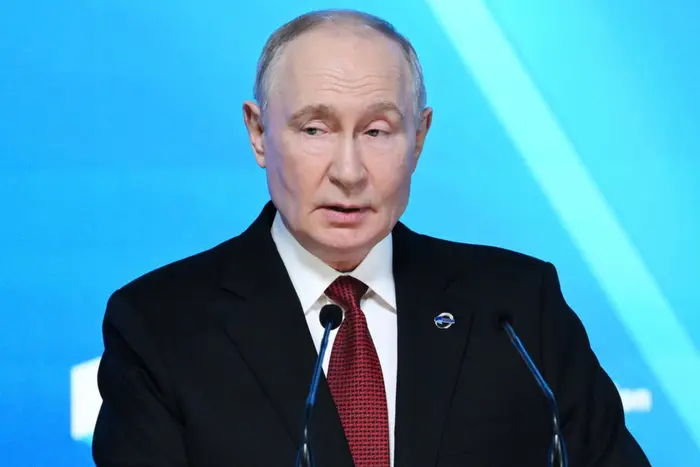
Russia has no intention of stopping the war: the bloody logic of Putin's escalation
The BBC website has published an article by the editor of the Russia news department, Steve Rosenberg, entitled «Putin shows no sign of stopping the war as Russia doubles down on Ukraine».
Steve Rosenberg quotes a fragment from his interview with one of the apologists of Putin’s «Russian world», Sergei Karaganov, who claims that Russia «will have to use nuclear weapons» if Europe continues to help Ukraine. «I asked him if he agreed that the last four and a half years have been catastrophic for Russia in terms of human losses and the deterioration of the security and economic situation».
«We have lost a lot of people, yes», he admitted, «and I criticize my government for not being tough enough. But now we are acting quite harshly in Ukraine». «We are liquidating Ukraine as a viable state».
If Moscow’s goal is «liquidating Ukraine as a viable state», then it is hard to imagine that the war will end anytime soon.
Putin will not stop until there are no more Russians he can drive into war. The Russian dictator still cannot believe that they failed to capture Ukraine. But he knows that if he retreats, it will be his last day on earth.
Steve Rosenberg’s new article attracts attention not so much for its yet another war prediction, but for the fact that, through an interview with one of the most famous representatives of the Russian foreign policy school, Sergei Karaganov, it allows us to see the logic that guides the Russian political elite today.
It is important to note that this is no longer just about Moscow’s territorial claims to Ukraine, not about individual military goals, and not even just about confrontation with NATO. This is a fundamentally different vision of the future of Ukraine, Russia, and the entire European security system.
Rosenberg directly asks the question: does the Kremlin intend to stop the war? In his assessment, there are practically no such signs at present. On the contrary, Russian statements, military activity, and rhetoric indicate a willingness to continue the war, despite the large-scale human losses and economic costs.
At the same time, Moscow is increasingly trying to present the war not as aggression against Ukraine, but as part of a broader confrontation with the West. This transformation is one of the most important for understanding the current Russian strategy.
Karaganov’s answer to Rosenberg’s question about the cost of the war for Russia itself is particularly revealing. Karaganov acknowledges the large human losses, but does not perceive them as an argument in favor of ending the war. On the contrary, he criticizes the Russian authorities for not being tough enough and states that Russia is now acting tough enough to «eliminate Ukraine as a viable state».
And this phrase is much more important than it might seem at first glance. If the goal is not to force Ukraine into a certain political agreement, not to seize certain territories and not to change its foreign policy course, but to deprive Ukraine of the opportunity to exist as an independent and functional state, then the very logic of war becomes long-term. In such a model, a compromise with Kyiv is perceived not as a way to achieve a political result, but as a rejection of a strategic goal.
In view of this, one should not perceive every Russian statement about negotiations as evidence of the Kremlin’s readiness to end the war. Negotiations may not be an alternative to war for Moscow, but one of the tools for continuing it by other methods. The key question is not whether Russia is ready to talk, but under what conditions it is ready to agree to stop the use of force and whether these conditions provide for the preservation of Ukraine as a full-fledged sovereign subject.
In this context, Karaganov’s words have special weight. He is not a formal representative of the Russian state, and his statements cannot be literally identified with the official position of the Moscow regime. But Karaganov has long been a member of the circle of Russian foreign policy figures who publicly advocate a radical revision of Russia’s nuclear policy.
It is worth recalling that back in 2023, during a discussion with Putin at the Valdai Forum, he stated that Russia’s nuclear doctrine should supposedly be changed in the direction of lowering the threshold for the use of nuclear weapons and greater readiness for escalation. Putin did not reject the very formulation of the question then, although he outlined his own vision of the conditions for the possible use of nuclear weapons.
Now Karaganov is speaking even more frankly: if Europe continues to support Ukraine, Russia, according to him, may switch from conventional strikes to nuclear weapons. Moreover, he proceeds from the assumption that the West will not dare to respond with a nuclear strike on Russia. This is no longer just rhetoric about deterrence. This is an attempt to form a psychological model in which the fear of nuclear escalation should force Europe to abandon its support for Ukraine.
This reveals the fundamental feature of Russian nuclear blackmail. Its main function may not be the actual use of nuclear weapons, but the creation of political constraints for the enemy.
Moscow seeks to convince European societies and governments that each subsequent step in supporting Ukraine brings them closer to a direct confrontation with Russia. If such a psychological attitude is established, the Kremlin will be able to influence the decisions of the West even without resorting to nuclear use.
Although the nuclear threats of Russian politicians should be taken seriously, they should not be perceived as a final solution. It is worth taking seriously because Russia does indeed possess a huge nuclear arsenal and officially considers nuclear forces as a central element of strategic deterrence of the enemy.
Not literally – because there is a huge distance between a public threat and a political decision to use nuclear weapons. A nuclear strike would mean a fundamental change in the nature of the conflict, would create unpredictable risks for Russia itself, and could cause a military-political reaction, the consequences of which the Kremlin would not be able to fully control. Therefore, nuclear blackmail and nuclear war are not the same thing.
But there is another, much more dangerous trend: the gradual normalization of the very idea of the possibility of nuclear escalation. If a few years ago such scenarios remained mainly in the realm of strategic discussions, now they are increasingly heard as part of political argumentation. Karaganov actually proposes to consider nuclear weapons as a tool for forcing Europe to change its policy towards Ukraine. And this is a dangerous evolution of strategic thinking.
And even more importantly, something else. Moscow is increasingly trying to change the very definition of war. Foreign Minister Sergei Lavrov, in a conversation with Rosenberg, calls what is happening «Europe’s war against Russia» on the territory of Ukraine. This construction fundamentally changes the picture of the conflict: Russia ceases to act in it as a state waging war against a neighboring country, and positions itself as a party to a broader defensive struggle against the West.
This is not an accidental rhetorical construction. It allows the Kremlin to explain to Russian society the continuation of the war by the need to confront not Ukraine, but the collective West. Accordingly, even if the situation on the front does not bring victory, the war can continue as a supposedly existential confrontation.
And here we come to the key question: why does Putin not stop, despite the enormous price of the war? Explaining this only in terms of the personal motives of the Russian president would be too simplistic. Of course, Putin has personalized this war to a much greater extent than any other Russian ruler since the collapse of the USSR.
However, war has now become part of the functioning of the entire Russian political system. It provides for the mobilization of the state apparatus, justification of repressive policies, priority of military spending, control over the information space and formation of the image of an external enemy.
Therefore, for the Kremlin, ending the war is not just an order to stop hostilities. It is the need to answer the question of why the previous sacrifices were made, why the economy was transferred to military rails, why society was convinced for years of the need to fight the West and why hundreds of thousands of Russians were sent to the front.
The longer the war lasts, the more difficult it is for the Russian leadership to admit that the goals set have not been achieved. Instead of reducing the stakes, the political system may be interested in increasing the escalation so that the previous sacrifices can be presented as a necessary price for future victory.
The Russian state has demonstrated its ability to compensate for losses through mobilization, contract recruitment, financial incentives, and the gradual expansion of the military economy. At the same time, the Kremlin is forming a perception in society that normalization of relations with the West is impossible without a Russian victory.
The West is faced not only with the problem of «convincing Putin to stop». It is about the need to change the calculation on which Russian strategy is built. If Moscow believes that time is running out, that Ukraine will gradually become exhausted, that European societies will tire of the war, and that political cycles in democratic countries will sooner or later change their policies, then the Kremlin has no obvious incentive to rush to end the war.
Steve Rosenberg’s article is important not only because of Karaganov’s words. It shows a whole system of signals: the Russian leadership continues to describe the conflict as a confrontation with the West; Moscow is trying to weaken European support for Ukraine; Russian representatives are increasingly speaking frankly about the possibility of escalation; and the Ukrainian state remains for a part of the Russian elite not a subject of negotiations, but an object of strategic transformation.
The last point is of principle. If Ukraine is only a territorial issue for the Kremlin, then a compromise on borders is theoretically possible. If Ukraine is viewed as a problem of the very fact of its «independent existence», a compromise becomes impossible. Then the Russian strategy is aimed not simply at changing the front line, but at changing the political future of the Ukrainian state.
At the moment, the main conclusion from the current Russian rhetoric is not that nuclear war is inevitable. At present, there are no sufficient prerequisites for such statements. The key point is something else: Moscow continues to demonstrate its willingness to raise the stakes if it believes that this will allow it to break the political will of Ukraine and its European partners.
And this is where the line between propaganda and real strategy is drawn. Propaganda can be loud, exaggerated, and contradictory. But when the same logic – Ukraine as a «problem», Europe as a party to the war, nuclear weapons as a tool to deter the West, and victory as a necessary condition for Russia’s future security – is reproduced for years by various representatives of the Russian political system, it can no longer be attributed solely to the emotional statements of individual officials or experts.
Putin may indeed be able to stop the war someday. But for this to happen, not only his rhetoric but, above all, the Kremlin’s strategic calculation must change. As long as Putin’s criminal camarilla believes that continuing the war increases its chances of imposing its conditions on Ukraine and the West, the war itself remains for it not a failure that must be completed, but a tool with which it tries to achieve a political result.
Karaganov’s words about «the liquidation of Ukraine as a viable state» should be perceived not as a prediction of the future, but as an extremely indicative indicator of the thinking of a part of the Russian elite, which believes that the end of the war is possible only after a radical change in Ukrainian statehood. This means that the problem of ending the war is not only a ceasefire. It lies in changing the Russian idea of what the political future of Ukraine should be.
Until this breakthrough occurs, it would be premature to expect that Moscow will abandon its maximalist goals on its own. Therefore, any diplomatic efforts aimed only at fixing the current front line or a temporary ceasefire will not bring lasting peace, but will only create a pause before the next stage of aggression.
Until a political breakthrough in the Kremlin occurs, the only effective tool for deterrence and achieving peace is the creation of conditions under which Russia will be physically and economically unable to realize its maximalist goals.
And this requires not just defensive support for Ukraine, but a long-term strategy to exhaust the aggressor and strengthen Ukraine’s security architecture, including NATO membership or other tough guarantees that will make it impossible to carry out Putin’s criminal plans.









Коментарі — 0