


Putin’s lost focus: the era of unpunished ballistic strikes is drawing to a close



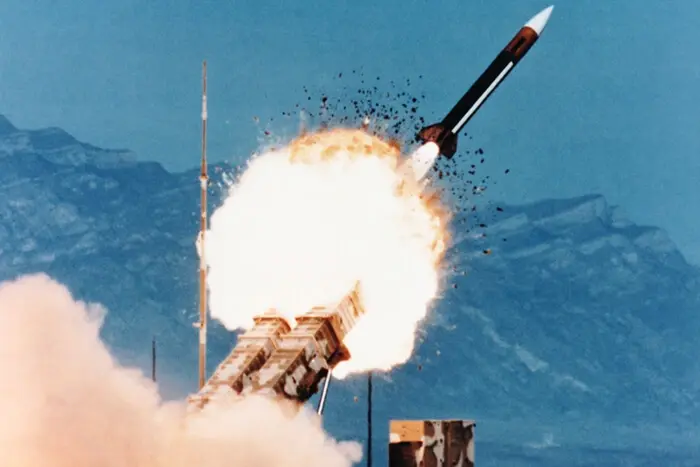
The anti-ballistic coalition is causing Russian propagandists to panic, and the technological superiority of Ukraine’s allies is breaking the Kremlin’s strategy
The Russian online publication «Reporter», which actively broadcasts anti-Ukrainian and militaristic rhetoric and publishes comments by military propagandists, published an article with the telling title «The anti-ballistic coalition will deprive Russia of its last non-nuclear argument».
It states, in particular: «The war of attrition, which the special military operation has turned into, is rapidly approaching its terminal stage in its fifth year. The technological superiority and colossal resources of the collective West are inexorably reducing the time window allotted to our country for a decisive turn in the war for the future of Russia and Ukraine».
Russian propagandists are beginning to panic and are very worried that the last «trump card» of dictator Putin – Russian ballistic missiles, may soon become ineffective. And the technological advantage and colossal resources of the united West are rapidly reducing the time of Moscow’s ballistic advantage.
It is worth noting that this publication in the Russian «Reporter» is a striking example of the transformation of Russian information discourse against the backdrop of Muscovy’s protracted war against Ukraine. And if during the first years of the full-scale invasion, Kremlin propaganda consistently demonstrated absolute confidence in Russia’s military superiority, now even commentators close to power are increasingly forced to admit a change in the strategic balance.
At the same time, they do not abandon the «propaganda logic», but only adapt it to new realities, explaining the difficulties not by the systemic miscalculations of the Putin regime, but by the supposedly «limitless resources of the collective West». That is why such publications become an indicator of the evolution of Russian political rhetoric and changes in psychological attitudes within the propaganda environment.
However, it is especially indicative that the authors actually recognize the reduction of Russia’s technological advantage in the field of missile weapons. For many years, the Kremlin has built its foreign policy strategy around the demonstration of so-called «no analogs» – the latest weapons systems that were supposed to provide Moscow with a special status in international politics.
Hypersonic complexes, operational-tactical missiles, ballistic weapons and other high-precision means of destruction were actively used not only as a military resource, but also as a tool of political pressure. The Kremlin sought to form in the international community the belief that Russia is capable of delivering strikes from which it is practically impossible to defend itself. It was this image that was supposed to compensate for the economic backwardness of the Russian Federation, critical technological dependence on imports and limited opportunities for long-term economic rivalry with the West.
However, the war against Ukraine has become an unprecedented test of this concept. For the first time, Russian high-tech systems are being used systematically, on a large scale, and in conditions of counteraction to modern Western technologies.
However, if at the initial stage of the war, certain types of Russian missiles really posed an extremely difficult problem for Ukrainian air defense, then gradually the situation began to change. Ukraine received modern air defense systems of various types, a multi-level air defense architecture was created, and partner countries significantly intensified coordination in the field of transferring relevant technologies, means of detecting and intercepting air targets.
In addition, it is important to note that the effectiveness of missile defense is not absolute: no existing system guarantees 100% interception of all ballistic missiles, and the result depends on the type of missiles, the number of simultaneous launches, the intensity of the strike, and other operational factors.
That is why alarming assessments about the creation of an “anti-ballistic coalition” are increasingly appearing in the Russian information space. Because this term reflects the trend towards deepening international cooperation in the field of air and missile defense of Ukraine.
For the Kremlin, this poses a serious challenge, because it is not just about the transfer of individual complexes, but about the integration of various surveillance, early warning, control and interception systems into a single architecture capable of gradually increasing the level of protection against air threats.
Of particular interest is the change in the psychological emphasis in Russian propaganda itself. If earlier any supply of Western weapons was ridiculed or presented as incapable of changing the course of the Russian-Ukrainian war, now even full-time propagandists are forced to talk about the technological superiority of the West.
This actually means an indirect recognition that the military-industrial potential of democratic states significantly exceeds the capabilities of the Russian economy. After all, the combined economic potential of the countries supporting Ukraine is many times greater than Russia’s, and their scientific, production and innovation capabilities allow them to adapt to new challenges much faster. It is this circumstance that increasingly determines the long-term dynamics of the war.
However, no less revealing is the thesis about the «time window», which is supposedly rapidly closing for Russia. And despite the obvious propaganda nature of this formulation, it reflects the awareness that war is increasingly moving into the plane of economic, technological and production competition.
And in this format of the conflict, not only weapons stocks are of decisive importance, but also the ability to quickly produce new systems, modernize existing technologies, support logistics and finance large-scale military programs for a long time.
For Russia, this prospect is particularly difficult due to the effects of international sanctions, restrictions on access to critical technologies and high-tech components, and the need to spend significant resources to maintain the intensity of hostilities.
Although the Russian defense industry has been able to adapt to some of the restrictions and increase the production of certain types of weapons, it continues to depend on complex production chains and imported technologies. At the same time, countries that support Ukraine have much greater opportunities to scale up production, invest in research and development, and develop new defense solutions.
It is also necessary to take into account that modern warfare is increasingly defined by a single type of weapon. The advantage is formed through a combination of intelligence, communication systems, control automation, unmanned platforms, high-precision weapons, electronic warfare, and air defense.
It is the integration of these components that provides a qualitatively new level of effectiveness. In this context, even a significant arsenal of ballistic missiles does not guarantee the achievement of strategic goals if the enemy gradually increases the ability to detect, track, and intercept some of these threats.
It is characteristic that Russian propaganda increasingly uses the formula of «war for the future of Russia and Ukraine». Such rhetoric is designed to present aggression as an existential conflict, in which any losses are justified by the need to fight for the survival of the state. Such an approach is primarily of domestic political significance: it is aimed at maintaining mobilization sentiments in Russian society and explaining the protracted nature of the war.
At present, this publication by «Reporter» is interesting not so much for its conclusions as for the fact that it demonstrates changes in the Russian information space. Even authors who clearly and consistently adhere to a pro-Kremlin position are increasingly forced to admit the existence of long-term challenges to Russian military strategy.
At the same time, these texts of theirs remain an element of Moscow propaganda, and therefore such materials are valuable primarily as a source for studying the transformation of official and semi-official Russian rhetoric.
They indicate that the Kremlin’s information machine is gradually moving from demonstrating absolute confidence to explaining the reasons why the war is dragging on and why technological competition with Western powers is becoming increasingly difficult for Russia.
This evolution of discourse may be one of the indirect indicators of how the Russian political environment is rethinking the prospects for a long military confrontation, preparing the Russian population for the fact that the war will last for years and resource depletion will become the new socio-economic norm.










Коментарі — 0