


How to make «ordinary Russians» want Putin to end the war?



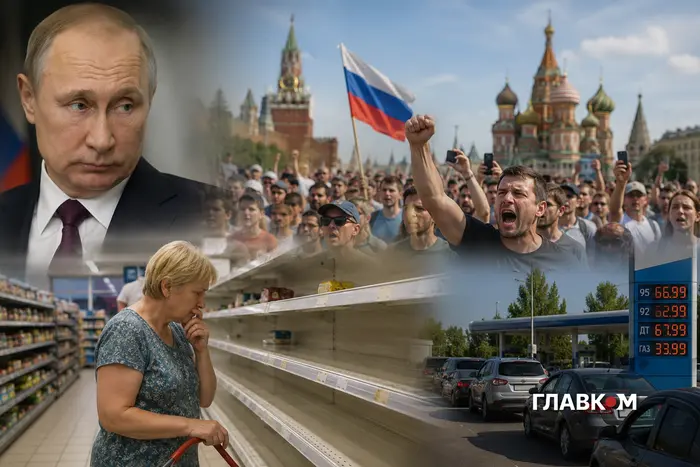
It is necessary for every Muscovite to feel the real price of this criminal war
The geopolitical revanchist Putin demonstrates by his actions that he is ready to fight with Ukraine forever if it does not agree to surrender. And although the development of events shows that Moscow is not winning, the Russian dictator keeps making the same unrealistic demands. How to make «ordinary Russians» want Putin to end the war themselves?
In order for those who have been repeating for years that they are not interested in politics to recognize the need to end the war, it is necessary to destroy their sense of security and isolation from the front. So that sanctions directly hit their everyday standard of living, and at the same time break through the information blockade of Kremlin propaganda. By demonstrating the real scale of the losses of the Russian army and the critical situation in the economy of the Russian Federation.
Although some progress has been made in this direction, it is still not enough to achieve a systemic breakthrough, since a significant part of the Russian population continues to live in conditions of passive economic adaptation, building new psychological mechanisms of protection from reality.
Breaking through this defense requires a significant increase in sanctions pressure on the Russian Federation, which will be able to destroy internal instruments of compensation for losses and sharply affect the basic level of well-being of Muscovites. The further strategy should focus not only on limiting the aggressor’s resources, but also on a systematic breakthrough of this psychological vacuum to demonstrate the real price of war.
This means that sanctions should become not just an economic barrier, but also a tangible catalyst for internal changes in public sentiment in Russia. Transforming abstract figures of macroeconomic losses into concrete everyday difficulties that will force the average Russian citizen to realize the direct connection between the criminal actions of his government, which unleashed a terrible bloody war in Ukraine, and his own impoverishment.
Which will deprive the Kremlin regime of the opportunity to further buy the loyalty of its own population and convert hidden public discontent into real internal pressure on the political leadership of the Russian Federation.
Since it is obvious that only through the complete destruction of the relative comfort zone inside Muscovy can a critical reduction in its ability to finance and continue long-term aggression in Ukraine be achieved.
It is necessary to reorient international restrictions from passive containment of military potential to active depletion of the socio-economic foundation of Russian totalitarianism. And this is extremely important, since only complete economic isolation and deprivation of the aggressor of the resources to wage war can force him to make real peace, stop financing the war machine, and undermine the internal stability of the Putin regime, which threatens global security.
We have seen how the unexpected shortage of gasoline, brought to them by «good Ukrainian drones», negatively affected the determination of «ordinary Russians» to continue the war in Ukraine. That key oil refineries and oil depots on the territory of the Russian Federation are being methodically and precisely hit.
And this shows that such measures can work successfully. And if Putin is not convinced by this, then the next step must be a shortage of products. At least the kind that is currently being felt in the occupied Crimea. Massive inflation and empty shelves in stores can push «ordinary Russians» to protest against the actions of the Putin regime.
Historical experience convincingly shows that the lack of basic goods, in particular fuel and food, is one of the most powerful factors in destabilizing totalitarian regimes. After all, it destroys the unspoken social contract between the dictator and the population, where loyalty is exchanged for stability and satiety.
The strikes on Russia’s oil refining infrastructure clearly demonstrated the vulnerability of its rear, causing the first serious cracks in the illusions of security of ordinary Russians. Making them realize that the war that Kremlin propagandists presented to them as a distant media show could leave them without fuel, light, and familiar comfort at any moment.
Transferring this experience to the food sector, following the example of temporarily occupied Crimea, where logistical collapse is already periodically creating empty shelves in stores, can turn passive support for the war into acute internal discontent.
For the average Russian citizen, war will remain acceptable only as long as it looks like a picture on TV and does not interfere with daily life. As soon as war affects the refrigerator of every family in the form of a shortage of bread, milk, or medicine, propaganda will quickly lose its deceptive effectiveness, giving way to the primary fear of survival.
The destruction of key railway junctions, port infrastructure, large distribution centers and wholesale warehouses in the totalitarian Moscow region could create isolated food crisis zones within the country. And this would force the Kremlin to choose between securing the front and maintaining order in the regions, which would inevitably lead to logistical chaos and increasing panic among Russians.
Therefore, economic and logistical pressure on the daily lives of the population of the Russian Federation is a critically important asymmetric tool in the Russian-Ukrainian attrition war.
The shortage of food and basic necessities could transform the domestic discontent of Russians into a direct threat to the Putin regime. Since empty store shelves and rapidly rising prices would destroy the appearance of stability, forcing the Russian population to switch from supporting the aggressive foreign policy of dictator Putin to their own survival.
Even when Putin’s repressive machine effectively suppresses political protests, it will be powerless against chaotic «hunger» riots or mass panics caused by total shortages, since such processes do not have a single leader and are guided by basic instincts.
The logic of events proves that the disruption of Russia’s internal stability due to resource shortages is a real path to the depletion of its military potential, since it will force the Kremlin to spend these reserves on extinguishing social fires instead of waging war. After all, in this case, Putin will have to choose between preserving his power and occupying Ukraine.
This choice will inevitably lead to a critical overstrain of the entire state system of the Russian Federation, since large-scale cuts in funding for social programs, delays in payments to state employees, and the rapid impoverishment of the population in the regions will provoke a wave of local protests and interethnic tensions that the Kremlin will no longer be able to ignore.
To maintain control over the situation inside the country and suppress potential rebellions, Putin will be forced to redirect colossal financial flows, the remnants of scarce equipment and, most importantly, the most combat-ready force units, including the Rosgvardia and special services, from the front line deep into Russia for police and punitive functions.
The weakening of the military machine on the front line due to a lack of resources and internal security means will expose the logistical chains and reduce the combat capability of the occupation forces, which will open up strategic opportunities for the Armed Forces of Ukraine to effectively liberate the territories. Which will ultimately force the Russian leadership to capitulate or radically reconsider its aggressive plans for the sake of its own survival.







Коментарі — 0