


The Kremlin Cannot Stop the War or Why a Peace Agreement with Putin Is a Waste of Time and Effort



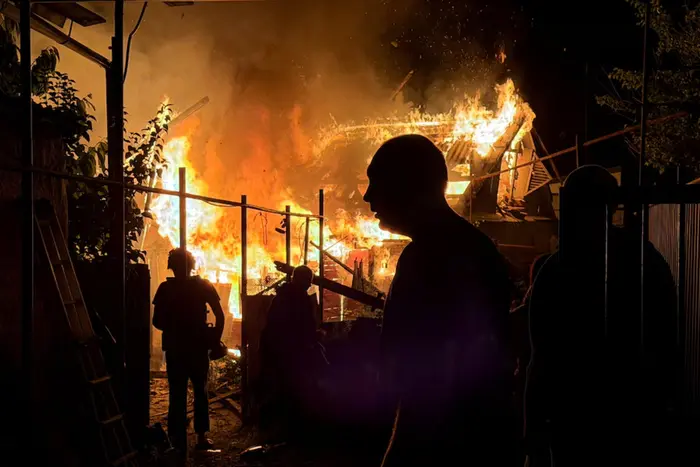
The Kremlin continues to view war not as a means of forcing Ukraine to negotiate, but as a key tool for achieving its own political and territorial goals
Reuters published an article titled «Putin says Russia will press on with front-line campaign regardless of Ukraine proposals», which states, in part, that «President Vladimir Putin said Russia would press on with its battlefield goal of fully seizing four Ukrainian regions, rejecting what he said was a new Ukrainian proposal to curb fighting in the war that has been going on for more than four years».
This Reuters article is much more important than a regular news report about another statement by dictator Putin. In fact, it reflects a whole system of strategic signals that the Kremlin is simultaneously sending to Ukraine, Western powers, countries of the Global South, and Russian society.
The statement of intent to continue hostilities regardless of any Ukrainian proposals to end the war once again demonstrates that the current Russian policy remains fundamentally unchanged. Moscow continues to view war not as a means of forcing Ukraine to negotiate, but as the main tool for achieving its own political and territorial goals. The Kremlin evaluates any diplomatic initiatives solely from the point of view of whether they help bring closer the realization of Russian strategic interests, and not because of the possibility of stopping the bloodshed.
And here, special attention is drawn to the formulation according to which Russia intends to «completely seize four Ukrainian regions». It is extremely indicative from both a political and legal point of view.
After holding illegal pseudo-referendums in the fall of 2022, the Kremlin announced the inclusion of Donetsk, Luhansk, Zaporizhia and Kherson regions into the Russian Federation, although at the time of the annexation announcement, Russian troops did not even fully control them.
Thus, Moscow created a situation where its own official documents contain claims to territories that remain under Ukrainian control. From this moment on, any cessation of hostilities without full establishment of Russian control over these regions would automatically mean for the Kremlin the existence of formally «Russian territories» that are actually controlled by another state.
For a totalitarian political system built on the cult of power and the constant construction of the Russian messianic myth, such a situation is politically unacceptable. That is why Putin’s words must be viewed not only as a military statement, but also as confirmation of the existence of a political trap that the Kremlin created for itself after the illegal occupation of Ukrainian lands.
The ruling regime of the Russian Federation cannot abandon the demand for the complete capture of these regions without significant domestic political consequences. Any compromise may be perceived by part of the Russian political elites, security forces and the most radical supporters of the war as an admission of strategic defeat.
At the same time, this statement by Putin is an important element of Moscow’s negotiating tactics. In the history of international conflicts, the parties very often demonstratively inflate their maximalist demands in order to create a more advantageous starting position for potential future negotiations. However, in the case of the Russian-Ukrainian war, the situation is somewhat more complicated.
If in most global confrontations maximalist statements are rather an instrument of diplomatic bargaining, then the Russian strategy of recent years indicates that the Kremlin is really trying to gradually realize its territorial claims by military means. That is why Putin’s statements cannot be perceived as a purely negotiating maneuver. They reflect the real political attitudes of the Russian terrorist regime.
Another aspect of the Reuters report also attracts attention. Putin stressed that Russian decisions do not depend on new Ukrainian proposals for a cessation of hostilities. And such rhetoric has several goals.
The Kremlin wants to demonstrate its own strategic confidence and unwillingness to appear as a party under international pressure. Russia is trying to create the impression that it is it that determines the pace of the war and controls the escalation or de-escalation of the conflict. In addition, Moscow seeks to convince the international audience that any peace initiatives should take into account, first of all, Russian conditions, and not the internationally recognized principles of Ukraine’s territorial integrity.
In fact, the Kremlin continues to use the concept of so-called coercion through force. It assumes that military pressure should force the enemy to agree to political concessions that would be unacceptable to it under normal conditions.
That is why representatives of the Kremlin authorities constantly emphasize the need to continue offensive operations regardless of diplomatic processes. War in this logic is viewed not as a consequence of a political crisis, but as a tool for changing political reality. And this is important to understand.
For Ukraine, this statement means that even potential negotiation formats cannot automatically lead to a cessation of hostilities. Moscow continues to link the possibility of ending the war with the achievement of its own maximalist goals, which remain completely incompatible with Ukrainian sovereignty and international law.
This significantly narrows the space for classical diplomacy, since a compromise between the complete withdrawal of Russian troops and the complete seizure of the four regions is practically impossible without a fundamental change in the position of at least one of the parties.
The international dimension of Putin’s statement is no less important. The Kremlin is well aware that the war increasingly depends not only on events directly on the front, but also on the political endurance of Ukraine’s Western allies. That is why Moscow regularly makes statements designed to convince Western societies of the futility of further support for Kyiv.
The Kremlin hopes that if it creates the impression that Russia is ready to fight indefinitely and Ukraine will have no chance of changing the situation on the battlefield, this could potentially intensify discussions within individual Western countries about the need to transition to a “freezing” model of the conflict.
In this context, the informational effect of such statements is sometimes no less important than their military content. Russian strategic communication is traditionally based on a combination of military signals with psychological influence.
The Kremlin seeks to demonstrate its own readiness for a long-term confrontation, while simultaneously raising doubts about the ability of Ukraine and its partners to maintain a high level of resource mobilization for many years.
Separate attention should be paid to the time context of the statement. If the war has been going on for more than four years, it means that the conflict is increasingly taking on the features of a protracted war of attrition. In such wars, the decisive factor is often not individual tactical successes on the front, but the sum of economic potential, demographic resources, military-industrial capabilities, political stability and international support.
That is why the Kremlin’s rhetoric about the readiness to continue the offensive regardless of negotiations should also demonstrate confidence in the ability of the Russian economy and military machine to support a long war. However, the real state of affairs indicates deep systemic problems that Moscow is trying to hide behind this show of strength.
At the same time, such brazen confidence of Muscovites means an attempt to hide the existence of internal challenges for Russia behind the bravado of rhetoric. Sanction pressure, increasing budget spending on defense, personnel shortages in the civilian economy, increasing dependence on military production and the need to maintain a high level of resource mobilization create a great burden on the Moscow state. That is why the Kremlin is interested in shaping the image of a successful war, even if the facts indicate the opposite.
From an international security perspective, Putin’s statement also points to a crisis in the modern architecture of deterrence. After the end of the Cold War, the international system was largely based on the assumption that large-scale wars of territorial conquest in Europe were a thing of the past.
Therefore, the Russian invasion of Ukraine has become a direct challenge to this model. Today, the Kremlin is actually demonstrating its willingness to continue the war until it achieves territorial results, despite international sanctions, diplomatic isolation, and economic losses. This is forcing many states to reconsider their defense strategies, increase military budgets, and invest more actively in their own security.
Putin’s statement also has an important domestic political dimension. For many years, the Russian government has been using the concept of a «historical struggle with the West» as the basis for legitimizing its own political regime. In this logic, the war in Ukraine is presented as an existential confrontation between Russia and Western civilization.
Such a distorted model allows the Kremlin to explain economic difficulties, international isolation, and the need to strengthen internal control. And any early end to the war without achieving the stated goals could call into question the effectiveness of this entire political construct.
It is also significant that the Kremlin is not demonstrating its willingness to revise its maximalist goals even after so many years of large-scale war. And this indicates a high level of political inertia of the Russian strategy.
Because the longer the war lasts, the more difficult it is for geopolitical revanchists to recognize the need for compromises, since the political price of such a decision is constantly growing. For totalitarian regimes, this problem is very acute, since the complete absence of open political competition leads to the accumulation of inflated expectations within the power vertical itself.
Now this Reuters material actually confirms what has gradually become increasingly obvious in recent years: Russia does not show any signs of readiness for a compromise political settlement if it does not involve the implementation of its key illegal territorial claims.
And this means that diplomatic processes, even if they continue, will most likely remain a tool for managing the conflict, rather than a mechanism for its final conclusion. After all, the fundamental contradictions between the parties remain too deep for compromise.
The prospects for achieving a lasting peace will continue to be determined not only by the course of the negotiations, but also by the balance of military, economic, technological and political resources of the parties, the level of international support for Ukraine.
And also by the ability of the international community to maintain unity on the principles of sovereignty, territorial integrity and the inadmissibility of changing state borders by force.
At the same time, the Russian dictator’s statement indicates that Ukraine’s efforts to conclude a «peace agreement» with Putin are an obvious waste of time and effort. Putin stubbornly refuses to admit that he is in big trouble and is about to lose the ability to provide his military machine with enough fuel to survive.
Therefore, if Ukraine continues its efforts, concentrating on strikes on oil refining and production centers, and continues to block supply opportunities to occupied Crimea, the results will be felt very quickly.
Dictator Putin has no desire to retreat from Ukraine, while the Russian economy is suffering colossal losses, critically reducing its ability to continue financing a protracted war. But Putin’s desire to become the greatest tsar of Russia is evaporating along with his terrorist army, international authority, and the remnants of common sense.








Коментарі — 0