


Ukraine's subjectivity is a geopolitical defeat for Russia and the collapse of its imperial revisionism



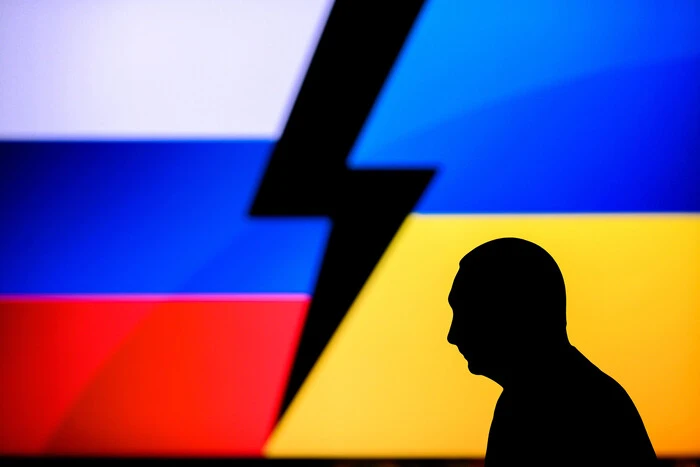
Ukraine's subjectivity is Russia's geopolitical defeat and the collapse of its imperial revisionism
Russia will gradually be forced to reckon with a fact that no historical concept can cancel: Ukraine exists, is a sovereign state, determines its own future and has the right to defend that future.
Kurt Volker, former US ambassador to NATO, gave an interview «Volker Calls for NATO-Ukraine Volker Calls for NATO-Ukraine Exclusion Zone» to Protect Allied Territory From Russian Missiles» to the information resource Independence Avenue Media.
Kurt Volker, in particular, noted: «But I see that President Trump and his negotiators now seem to have realized that Putin was simply lying to them and leading them by the nose. Putin will never conclude a peace agreement with Ukraine. He will not agree that Ukraine is a sovereign, independent state. He does not recognize President Zelensky as the legitimate leader of Ukraine. And he does not recognize the existence of an international border between Ukraine and Russia. Therefore, he is simply using the so-called peace talks as a tool to achieve US pressure on Ukraine, while he himself does not actually intend to agree to peace».
Kurt Volker’s statement is much more important than it might seem at first glance. This is not just another assessment of the intentions of the dictator Putin. If this assessment has truly become part of the strategic thinking of a certain wing of the American elites, then the very formulation of the question of ending the Russian-Ukrainian war changes.
After all, then the main problem is not how to convince Ukraine and Russia to find a «compromise», but how to create such conditions under which Russia will be forced to accept the existence of Ukraine as a sovereign state – regardless of whether the Kremlin likes it or not.
It is important to note that Volker has formulated this thesis not for the first time. In July, he directly stated that Putin is not interested in a conventional agreement to end the war, but seeks to subordinate Ukraine. In another interview, Kurt Volker noted that Moscow may agree to a ceasefire under pressure, but not to peace in the sense that it involves recognizing the right of Ukraine to independently determine its own future.
Independence Avenue Media emphasizes that Volker is a former United States ambassador to NATO, as well as a former US envoy for negotiations on Ukraine. That is, the assessment of the situation is given by an expert who knows the logic of American diplomacy well and has worked directly with the Ukrainian issue.
However, this does not mean that negotiations with the Russian Federation are absurd. Another thing that may be absurd is the belief that the very fact of negotiations automatically implies a desire for the same result.
Diplomacy does not work only when the parties want the same thing. It is especially needed when the parties have incompatible goals, but one or both sides are trying to change the cost-benefit ratio of the adversary. Therefore, it becomes fundamentally important for Ukraine to separate the concepts of «negotiations» and «peaceful settlement». They are not the same thing.
If Volker is right about the Kremlin’s strategic goals, then Ukraine should not set diplomacy the task of «agreeing with Putin on what Ukraine will be like». When the goal is to eliminate the subjectivity of the state, any negotiations about «concessions» will be perceived by the dictator as weakness.
Ukraine should use diplomacy to achieve an end to Russian aggression on terms that do not eliminate Ukrainian sovereignty. At the same time, Western allies should provide pressure that will make continued aggression too costly for the Kremlin.
And this is where the fundamental difference between the two models of negotiations lies. The first model is based on the assumption that Russia wants peace, but has certain security requirements, and Ukraine also wants peace, but has its own requirements. So, the task of diplomats is to find a middle ground.
The second model is based on the fact that Russia uses negotiations as a continuation of the war by other means: to stall for time, split the Western coalition, reduce military aid to Ukraine, create pressure on Kyiv, and create the impression in the West that the problem is not Russian aggression, but the unwillingness of Ukrainians to «give in for the sake of peace».
If Washington understands that the second model is fair, then the main mistake is not Ukraine’s participation in the negotiations itself, but the asymmetry of the negotiation process. Moscow is negotiating to change the political behavior of the West, while the West may mistakenly perceive Russia’s participation in the negotiations as evidence of Moscow’s readiness to end the war.
This is precisely the fundamental point for Ukraine. In such a situation, Ukrainian diplomacy must proceed from a paradoxical but historically well-known logic: sometimes negotiations are needed not to achieve peace, but to create conditions under which the enemy will eventually agree to peace. The negotiating table then becomes not an alternative to force, but one of the instruments of its political application.
This means that Kyiv should not demonstrate that it refuses to negotiate. On the contrary, a strategically advantageous position is a constant readiness for negotiations, but on the condition of clearly fixing the fact that Ukraine does not trade its own right to exist.
This is the logic that Kurt Volker described when explaining the Ukrainian position: Ukraine must demonstrate both the ability to resist and the readiness for peace, leaving Russia as the party that refuses to end the war.
This has an extremely important political effect, especially in relations with the United States. After all, for Washington, the fundamental question is not only how much territory each side controls. No less important is who appears to be an obstacle to ending the war.
Ukraine must consistently remain the side that says: «We are ready for a ceasefire, negotiations and a political settlement».
At the same time, Russia must explain, under pressure from specific questions, why it does not accept a ceasefire, why it demands the political subordination of Ukraine, why it puts forward conditions that go far beyond the issue of territories.
In this sense, the diplomatic struggle to determine who is the side that does not want peace may be no less important than the military struggle on the battlefield.
At the same time, Volker’s words also have a worrying aspect for Ukraine. If Washington really comes to the conclusion that Putin does not want a peace agreement, this does not mean that the United States will inevitably switch to a strategy of long-term support for Ukraine.
Donald Trump’s administration may draw a completely different conclusion: if Russia cannot be quickly persuaded to come to an agreement, the conflict must be frozen as quickly as possible, even if the final political settlement is postponed.
But for Ukraine, this is a fundamental difference. A ceasefire may be useful, but «freezing» the war without mechanisms to deter Russia will only be an operational pause before the next round of Moscow’s aggression.
Therefore, it is not enough for Ukraine to seek the cessation of hostilities. It is necessary to insist on a ceasefire that does not turn into the demilitarization of Ukraine, does not consolidate the legal recognition of the occupation, and does not create an opportunity for Russia to resume the war with impunity after the regrouping of forces.
And this is where the most important question arises: what to do if Russia really does not recognize Ukraine as a full-fledged subject of international politics? The answer is that Ukraine should not try to change the Russian picture of the world through concessions. This is practically impossible. A state cannot guarantee its security by accepting that its adversary has the right to deny its sovereignty.
If Moscow proceeds from the concept that Ukraine is not a full-fledged state, but a territory that under certain circumstances should return to Russian control, then even the concession of territories in itself does not eliminate the cause of the conflict. On the contrary, it may confirm to the Kremlin the effectiveness of forceful revisionism.
At present, it is necessary to distinguish between the territorial issue and the issue of statehood. Territorial conflicts in history have often ended in compromises. But a compromise regarding a specific territory is fundamentally different from a compromise regarding the right of a state to exist.
Ukraine can discuss procedures, terms, control regime over territories, international monitoring, security guarantees, future status of temporarily occupied lands. But it cannot make the very principle of its own independence a subject of bargaining. This is the line that Ukrainian diplomacy must draw especially clearly.
Putin can change tactics if the balance of power, Russia’s economic capabilities, the domestic political situation, or the position of the US and Europe change. Even if his strategic goal is to subjugate Ukraine, this does not mean that he will refuse a temporary ceasefire under any circumstances.
And here an important opportunity arises for Ukraine. If Russia agrees to a ceasefire not because it has changed its absurd historical claims, but because the war has become too expensive for it, then the ceasefire should be seen not as a finale, but as a result of deterrence.
It can become strategically useful if Ukraine strengthens its army, defense industry, air defense, international guarantees, and European integration during this time.
If, under the guise of peace, Ukraine is persuaded to weaken its own defense capabilities, while Russia is allowed to maintain its military potential and sanctions relief without changing its behavior, such peace risks being only a pause.
Therefore, the real formula for Ukraine today does not sound like «peace or war». It sounds like «peace through a change in Russia’s calculations». This is a fundamentally different strategy. Because it is aimed at making continued aggression prohibitively expensive and politically impossible for the Kremlin.
In such a model, diplomacy, military aid, sanctions, long-range weapons, the development of the Ukrainian defense-industrial complex, European integration, and US-European coordination cease to be separate policy directions.
They become elements of a single negotiating mechanism. Kurt Volker has repeatedly emphasized this: Putin must feel the pressure, and not just hear another offer of negotiations. That is why combining diplomatic efforts with increased military and economic support for Ukraine is the only way to force the Kremlin to make real concessions.
This also explains why it is so important for Ukraine to avoid a situation where American diplomacy exerts the main pressure on Kyiv, while Russia gets the opportunity to observe this process from the sidelines.
In such a configuration, negotiations become a Russian tool. If Washington simultaneously puts pressure on Moscow by economic, military and diplomatic means, and Ukraine demonstrates readiness for negotiations, then the negotiation structure itself begins to work against the Russian strategy.
That is why it is critical for Ukraine not just to convince Donald Trump’s administration that Putin is «lying». We need to help Washington move from the psychological discovery that «Putin is not keeping his promises» to a strategic conclusion: Russian behavior is destructive to its goals.
If the Kremlin wants not a compromise peace, but a change in Ukraine’s status, then the problem is not that the peace offer is not attractive enough. The problem is that Russia still considers the continuation of the war more profitable than its end. And this is a completely different task for American policy.
There is no need to endlessly create new formulas that could «interest Putin». His calculations need to be changed. If the dictator is convinced that time is working in his favor, negotiations will once again be used to stall for time.
If Putin is convinced that the West will tire before Russia, negotiations will become a way to split the Western coalition. If the Kremlin believes that Ukraine will eventually agree to surrender terms under pressure from Washington, it will have no incentive to make significant concessions.
Ukraine’s most important resource is not only weapons, but time. Of course, provided that this time works to strengthen the Ukrainian state, and not to exhaust it. Ukraine should strive for peace, but not at any cost. Because peace, which deprives the country of the ability to defend itself, does not eliminate the threat in any way. It only transfers this threat to the future.
To some extent, this is precisely why the current situation is paradoxical. After all, the more Washington becomes convinced that Moscow is using negotiations as an instrument of war, the less reason there is to demand «more flexibility» from Ukraine in order for the negotiations to continue.
Instead, it becomes advisable to make the negotiation process interdependent: each subsequent step by Russia must be accompanied by specific responses from the West, and each refusal by specific consequences. This is the principle of «peace through verified actions», and not «peace through trust in statements».
For Ukraine, this is especially important because Russia has been demonstrating for many years the ability to use legal and diplomatic formulas to cover up strategic goals. Therefore, it is necessary to evaluate not rhetoric, but behavior.
Will the strikes stop? Will mobilization stop? Will military production decrease? Will Moscow agree to international monitoring? Will the attempt to impose foreign policy restrictions on Ukraine stop? Will Russia accept the principle that Ukraine itself determines its alliances and political course? These are the questions that should be the criteria for real readiness for peace. And in this sense, Volker’s words may mean not bad news for Ukraine, but potentially very important news.
If American policy truly shifts from the assumption that «Putin just needs to be offered a good enough compromise» to the understanding that «Putin will only agree to a compromise if his strategic calculations change», Ukraine gets a chance to move from defending itself against American pressure to working with the United States to create that calculation. However, this is only a chance, not a guaranteed outcome.
As of August 2026, the negotiation process has not disappeared: Ukraine has submitted its own proposals for ending the war to American negotiators, and American representatives were to continue contacts with both Kyiv and Moscow. But the question now is not whether to negotiate, but what exactly the goal of these negotiations should be.
For Ukraine, the answer should be as sober as possible: not to obtain from Putin recognition or respect for Ukrainian statehood, not to convince him of Ukraine’s historical correctness, and not even to try to force him to change his ideological stance.
It is enough to ensure that the Russian dictator’s disagreement with the existence of an independent Ukraine ceases to be a reason for war. Which is the essence of deterrence, which is achieved by arming the Armed Forces of Ukraine to the point where any attempt at aggression will cost the Kremlin the collapse of its own regime.
International politics is rarely based on states sincerely recognizing each other’s rightness. It is based on the limits of permissible behavior. The Soviet Union and the West did not have to trust each other to avoid outright war.
European states did not abandon opposing historical interpretations in order to create a system in which borders were no longer changed by force. On the contrary, they learned to coexist with these differences, placing respect for international law, sovereignty, and collective security above historical grievances and territorial claims.
The goal of Ukrainian politics should be precisely this situation: Russia can remain revisionist, imperial, and hostile to Ukrainian sovereignty in its ideology, but it must be deprived of the opportunity to implement this ideology by military means.
Trying to make peace with someone who does not recognize your existence would be absurd if it were a matter of reconciling values and historical views. But international diplomacy does not require such reconciliation. Its task is more modest and at the same time more realistic: to make war unprofitable and peace acceptable even to someone who has not renounced his imperial beliefs. And this is where the line between surrender and peace is drawn.
Surrender means admitting: «We will accept your worldview if you stop shooting». To fight back means proving: «You can have any worldview, but you cannot impose it on us by force».
And if Volker’s assessment has indeed become part of the new understanding in Washington, then for Ukraine the main task becomes not to convince America that Russia is bad. That is no longer the main thing. The main thing is to convince the United States and Europe that a stable peace is possible only when Russia understands that an independent Ukraine is not a subject of negotiations, but a reality of the international system.
And that is why the paradox of the current moment is that the path to negotiations with Russia may lie not through greater concessions to it, but through greater Ukrainian strength. If Putin is indeed using negotiations to weaken Ukraine, the answer should not be Ukraine’s withdrawal from the negotiations, but depriving Russia of the opportunity to use negotiations as a weapon.
Then the negotiating table will cease to be a trap and become a tool. Not a table at which Ukraine asks Russia to recognize its right to exist, but a table at which Russia will gradually be forced to reckon with a fact that no historical concept of its own can cancel: Ukraine exists, is a sovereign state, determines its own future, and has the right to defend that future. It is from this, and not from Russian goodwill, that true peace can begin.








Коментарі — 0